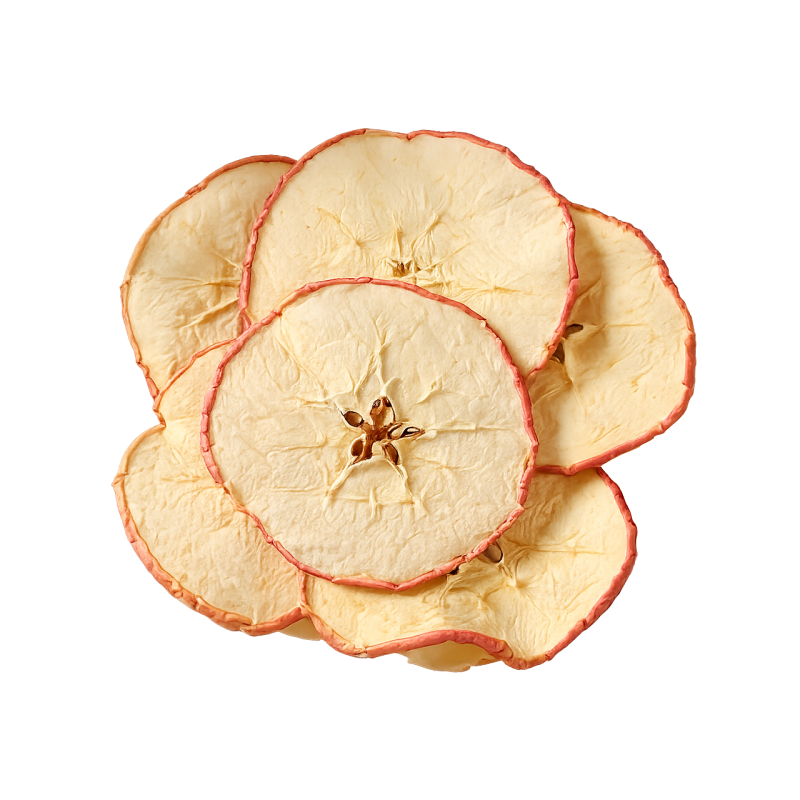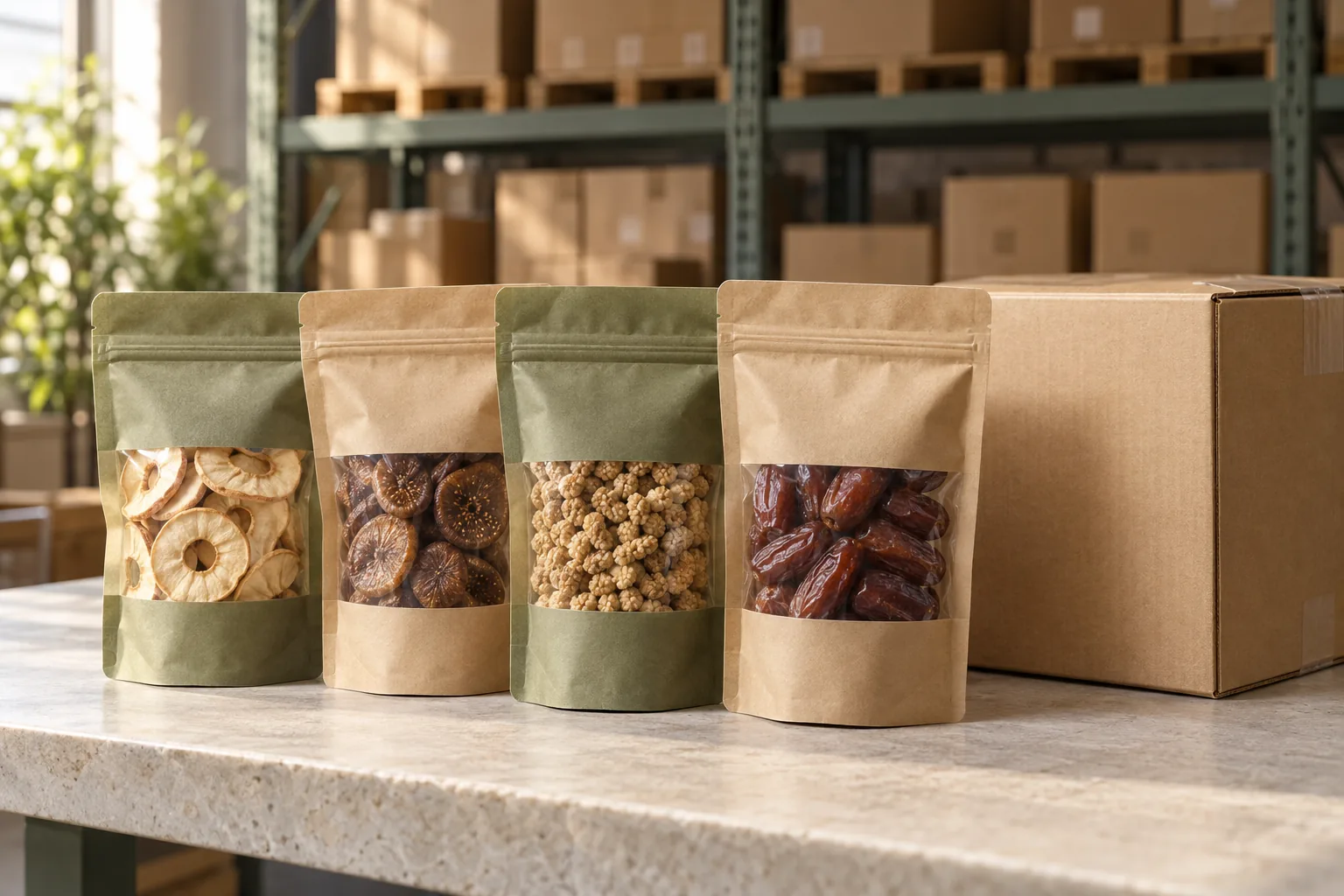
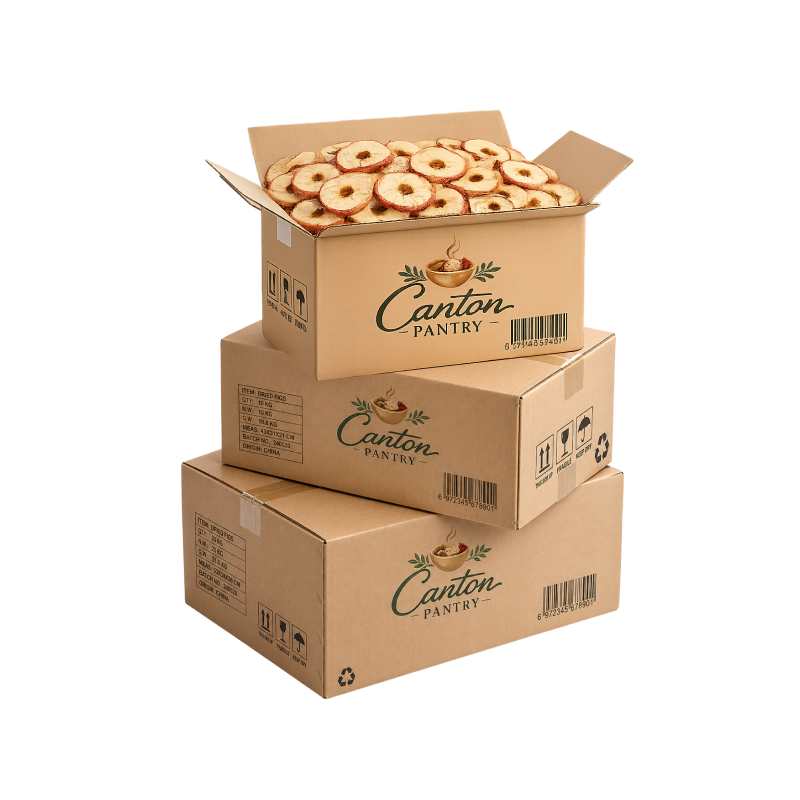
Bulk dried apple slices can be an easy entry product for an Asian grocery, snack shelf, mixed dried fruit program, or private-label range. The difficult part is not finding a product photo or a low unit price. It is agreeing on a repeatable slice specification, a pack format that fits the channel, and a carton plan that still works after freight and destination costs are added.
This guide explains what an importer or retail buyer should confirm before ordering. Use the Dried Apple Slices product page for the current product direction, then request a sample and quotation for the exact slice, pack, carton, and destination requirements.
1. Start with the sales channel, not the bag
The same dried apple slice can be sold in several ways, and each channel needs a different buying brief.
| Sales channel | What the buyer should prioritize |
|---|---|
| Asian grocery snack shelf | Easy-to-understand name, clean appearance, practical retail weight, barcode space, and repeatable replenishment |
| Mixed dried fruit pouch | Similar piece size, balanced appearance, compatible texture, and a clear ingredient declaration |
| Gift or seasonal set | Visual consistency, pouch or box presentation, insert card, and coordinated carton packing |
| Repacker or food-service buyer | Bulk carton efficiency, inner-bag protection, stable supply, and a specification that can be rechecked on arrival |
| Private-label brand | Approved sample, artwork control, label language, barcode, packaging MOQ, and production lead time |
A bulk carton is not automatically a retail-ready product. Before asking for a price, state whether you need loose bulk packing, a shelf-ready pouch, a resealable bag, a mixed-fruit pack, or a private-label package.
2. Check the sample before comparing the quote
A sample is useful only when the buyer records what is being approved. Do not compare two prices if one supplier is quoting a thin, small, dry slice and the other is quoting a larger or softer slice.
Review these points:
- Slice size and thickness: confirm the preferred range and how much variation is acceptable.
- Color: check whether the lot has a consistent appearance and whether browning is acceptable for the intended shelf.
- Texture and moisture: decide whether the target is crisp, firm, or slightly soft. Ask how the product should be stored after opening.
- Breakage: inspect both the sample bag and the outer carton plan. A good-looking sample can arrive with a high breakage rate if the inner protection is weak.
- Cleanliness and aroma: confirm that the sample is free from visible foreign matter and has the expected fruit aroma.
- Repeatability: ask whether the sample is from current stock and whether the same specification can be repeated in production.
For more general inspection points, see our guide to evaluating dried fruit quality before a wholesale order.
3. Send a specification sheet to the supplier
A clear specification sheet turns a broad product name into a quote that can be compared. The final values should come from the approved sample, supplier confirmation, and destination-market label review.
| Specification field | What to confirm |
|---|---|
| Product name | Dried apple slices, Chinese name, and declaration name if required |
| Ingredient status | Single ingredient or part of a mixed dried fruit pack |
| Slice specification | Shape, approximate size, thickness range, and acceptable variation |
| Taste and texture | Natural sweetness, added sugar if any, crisp or soft texture, and aroma |
| Appearance | Color range, browning tolerance, broken-piece tolerance, and cleanliness |
| Net weight | Weight per retail pouch, inner bag, and total net weight per carton |
| Packaging | Bulk inner bag, snack pouch, resealable pouch, box, or private-label format |
| Carton | Units per carton, net weight, gross weight, dimensions, and carton strength |
| Shelf life | Proposed shelf life, lot date, storage conditions, and final label statement |
| MOQ | Product MOQ, retail-pack MOQ, printing MOQ, and mixed-SKU rules |
| Lead time | Sample, artwork, packing, production, and shipment preparation |
| Label | Ingredients, net weight, dates, storage, barcode, language, and responsible importer details |
The current product brief uses a common 9–12 month shelf-life reference when the product is sealed away from humidity. Treat this as a planning reference only: the final lot, packaging, storage conditions, and destination-market requirements must be confirmed before printing a label.
4. Choose the packaging format
Bulk cartons for repackers and distributors
Bulk packing is useful when the buyer will repack locally, supply food service, or combine several dried fruits in a larger program. Confirm the inner-bag material, moisture protection, carton dimensions, gross weight, pallet or loading plan, and how the product will be protected from crushing.
Retail pouches for grocery and e-commerce
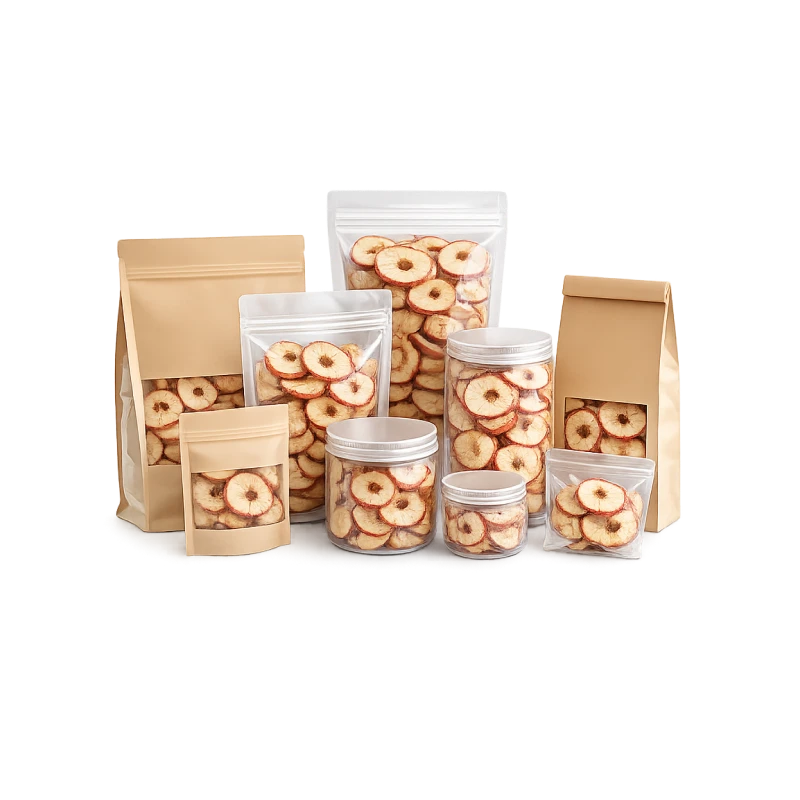
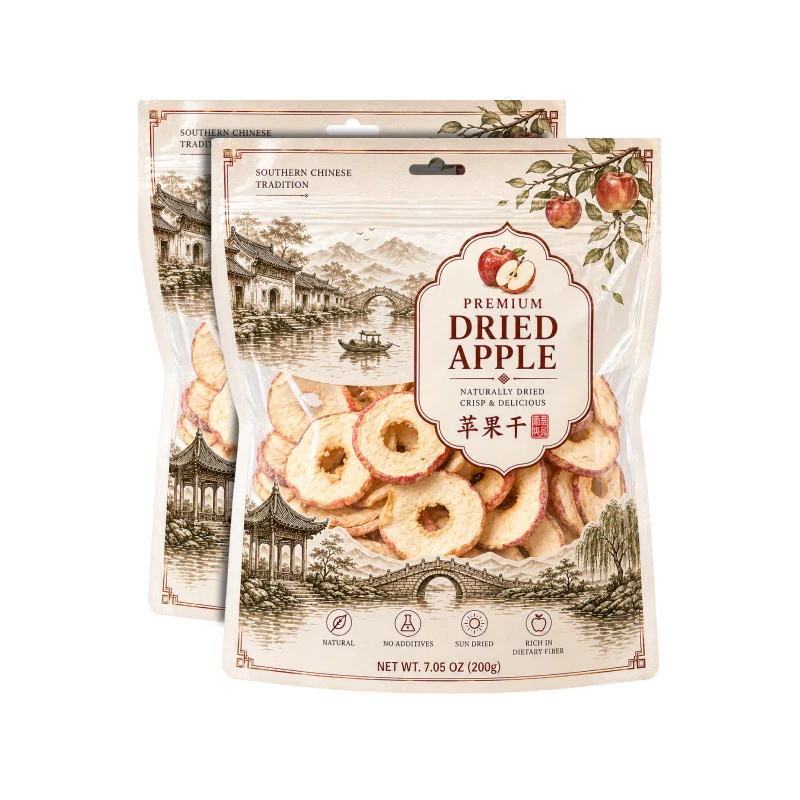
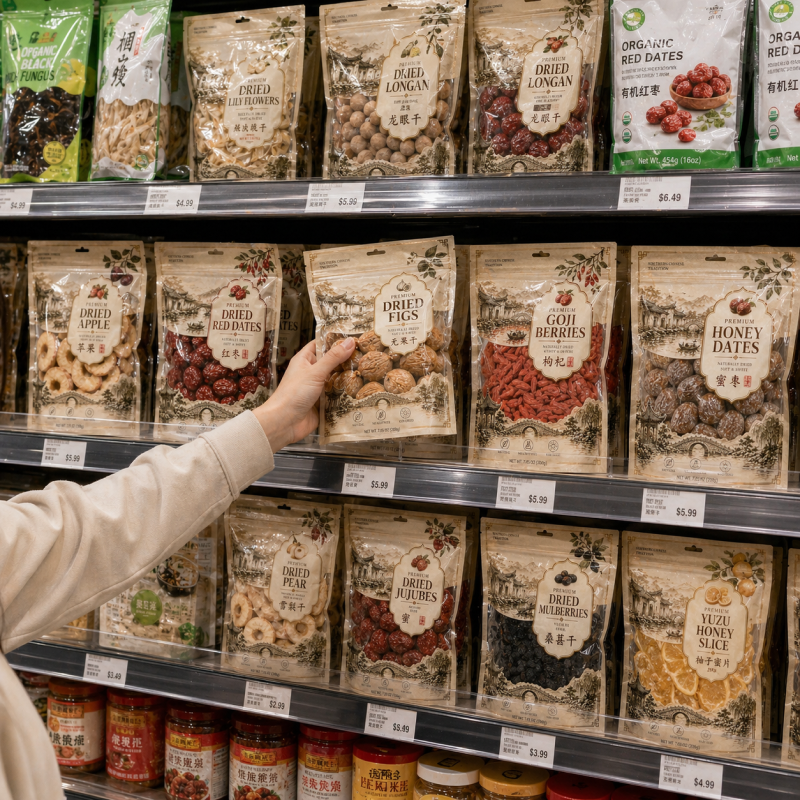
Retail pouches need a clear product name, net weight, ingredient statement, storage instruction, date fields, barcode space, and enough area for the target market's language requirements. A transparent window may help shoppers see the slices, but the packaging still needs to be assessed for light, humidity, sealing, and transport conditions.
Resealable or private-label packs
A resealable pouch can suit a family-size or repeat-use product, while a private-label pack gives the retailer more control over the shelf story. Both formats add decisions about zipper quality, film structure, artwork, printing, packaging MOQ, carton count, and lead time. Approve a physical sample or sample box before authorizing a production run.
5. Calculate landed cost by sellable unit
The lowest product price is not necessarily the lowest retail cost. Compare offers using the same basis:
Product cost + inner packaging + retail pouch or box + outer carton + local handling + freight and insurance + destination charges, divided by the number of sellable units.
When building the calculation, include:
- units that may be lost to breakage or quality sorting
- the difference between net weight and gross carton weight
- packaging artwork or plate costs for private-label work
- sample, inspection, consolidation, and document costs
- the retail margin required by the final channel
- a currency buffer if the quote and retail price use different currencies
You can use the more detailed wholesale dried fruit landed-cost and retail-margin guide when comparing a bulk carton with a retail pouch.
6. A lower-risk first-order workflow
For a first dried apple slice program, use a short approval sequence:
- Define the channel, target retail weight, and expected order size.
- Request a sample that states the slice, sweetness, texture, and packaging direction.
- Record the approved sample with photos and a written specification.
- Compare a bulk-carton option with one retail or resealable option if the channel is not yet proven.
- Approve the label, barcode area, inner bag, outer carton, and carton count.
- Confirm the quotation, MOQ, lead time, shipping term, and destination details.
- Inspect the production sample or packing sample before the larger shipment moves forward.
- Record arrival condition and customer feedback for the next replenishment.
For more detail on MOQ, labels, and packaging decisions, see what buyers should confirm before ordering.
7. What US importers should prepare
If the order is going to the United States, the importer should provide the target sales channel, intended label language, importer information, and any requirements already identified by the buyer's customs broker or compliance team. The supplier can coordinate product data, samples, packaging files, and export cartons, but the importer remains responsible for checking the rules that apply to the final product and label.
Before shipment, keep one controlled version of:
- the approved product specification
- the ingredient and label file
- the sample and production reference photos
- the carton and packing-list information
- the agreed shipping basis
- the contact details for the importer and broker
Our guide to dried fruit and soup-ingredient shipments for US importers can help organize the questions before you request a quote.
Frequently asked questions
How do I buy bulk dried apple slices?
Start by stating the channel, slice preference, pack weight, carton quantity, destination, label language, and expected volume. Request a sample and a written quotation for the same specification so different suppliers can be compared fairly.
What does grade mean for dried apple slices?
Grade may refer to the product's size, appearance, texture, processing, or the supplier's internal sorting standard. It is not enough to write “premium” on a purchase order. Record the actual sample, acceptable variation, and inspection points.
Can I order retail pouches or private-label bags?
Retail pouches, resealable bags, mixed fruit packs, and private-label formats can be planned for selected programs. Confirm artwork, barcode, film or pouch structure, packaging MOQ, carton count, and lead time before production.
Do you offer 10 kg cartons?
Carton weight is not universal for every slice, pack, or destination. Ask for the net weight, gross weight, dimensions, inner-bag arrangement, and loading plan for the exact quotation rather than assuming a fixed carton size.
What should I compare when choosing between two samples?
Compare the same slice size, thickness, texture, color range, breakage tolerance, net weight, packaging, and storage condition. A cheaper sample is not a better offer if it cannot be repeated or arrives with excessive breakage.
How can I request a sample or wholesale quote?
Open the Dried Apple Slices product page or send a wholesale inquiry with your destination, channel, preferred pack format, target weight, and estimated quantity. The more specific the brief, the more useful the sample and quotation will be.
 Related products