Importing dried fruit and Cantonese soup ingredients into the United States is not only a freight question. Buyers should align product format, documentation, labeling, supplier readiness, and landed-cost planning before production starts.
This article is written for U.S. importers, Asian grocery distributors, specialty food buyers, repackers, and private label teams considering products such as red dates, goji berries, dried figs, dried snow pear, food-grade botanicals, and Cantonese soup mix packs.
It is a practical buyer guide, not legal advice. Importers should confirm product-specific requirements with their customs broker, freight forwarder, regulatory consultant, and official U.S. government resources before shipment.
1. Know what product format you are importing
The first question is not simply the product name. It is the import and sales format.
| Format | Typical buyer | Why it matters |
|---|---|---|
| Bulk dried ingredients | Importers, repackers, food service buyers | Often needs clear grade, moisture, carton, and repacking plan |
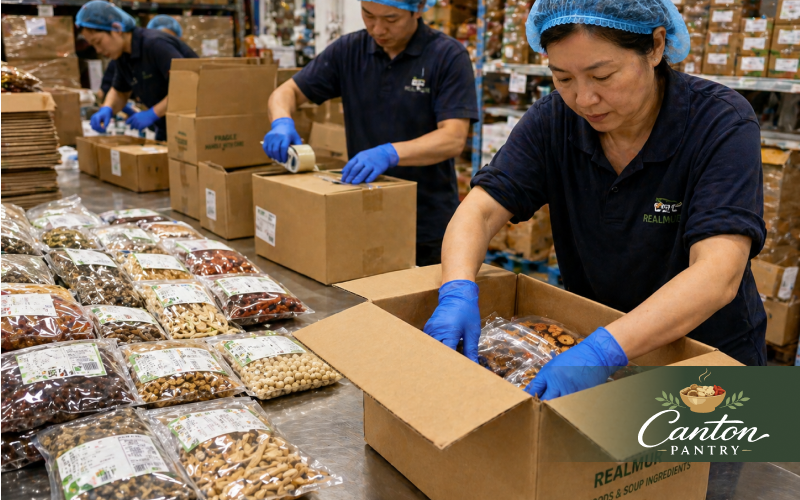
| Retail-ready pouches | Asian grocery and specialty food retailers | Label, barcode, net weight, shelf layout, and case pack matter early |
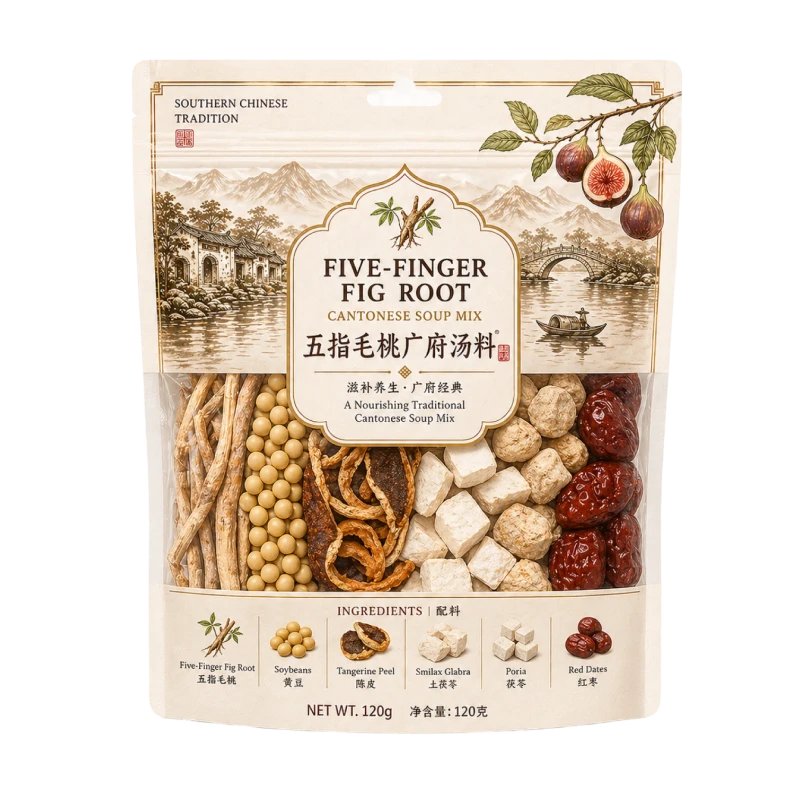
| Soup ingredient packs | Grocery, wellness, and family cooking channels | Ingredients list, usage notes, and pack consistency must be clear |
| Gift sets and mixed packs | Seasonal retail and specialty buyers | Presentation, inner pack structure, and carton protection become more important |
A quotation is only useful when the supplier knows which format you need. A bulk carton quote and a retail pouch quote may look similar at the product level, but they can lead to very different packaging cost, lead time, carton volume, and landed cost.
2. Understand FDA food import basics
Most food products imported into the United States must meet U.S. food safety and labeling requirements. The FDA explains that imported food must be safe, sanitary, and labeled according to U.S. requirements. The FDA also notes that importers can generally import food without prior FDA approval when relevant facilities are registered and prior notice is provided.
For official guidance, buyers should review:
- FDA: Importing Food Products into the United States
- FDA: Importing Human Foods
- FDA: Prior Notice of Imported Foods
In practical sourcing terms, U.S. buyers should ask early about:
- food facility registration status where applicable
- prior notice coordination
- product identity and ingredient list
- English label information
- lot coding and traceability
- whether the product is food, dietary supplement, or another regulated category
Do not wait until the cartons are packed to review import details. If the product name, ingredient declaration, net weight, or label claims need changes, late-stage corrections can delay the shipment or create relabeling cost after arrival.
3. Check USDA APHIS plant product considerations
Dried fruits and plant-based soup ingredients can also raise plant product questions. USDA APHIS provides public guidance on plant and plant product import requirements. Its generally authorized plant product guidance states that dried, cured, cooked, or processed fruits and vegetables, including cured figs and dates, may be imported without a USDA APHIS import permit, phytosanitary certificate, or other APHIS compliance from all countries unless otherwise specified.
Buyers should still be careful. The APHIS page also notes that the list is not all-inclusive and commodities remain subject to inspection at ports of entry.
For official guidance, review:
- USDA APHIS: Generally Authorized Non-Propagative Plant Products
- USDA APHIS: How to Import Plants and Plant Products
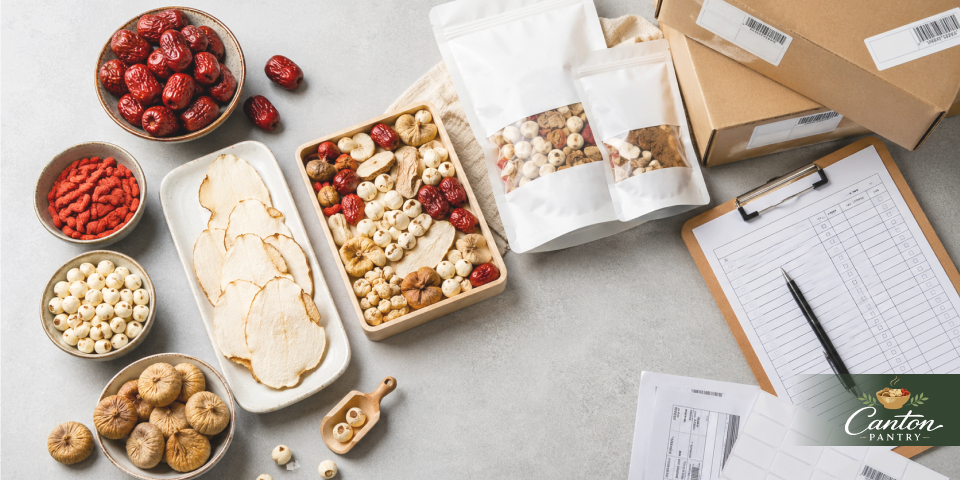
This matters for products such as dried figs, red dates, dried pear, lotus seeds, dried tangerine peel, and food-grade botanical ingredients. A reliable supplier should be able to describe the product form clearly, while the importer or broker confirms the exact admissibility and filing requirements.
4. Confirm the product specification before samples are approved
For dried fruit and soup ingredients, small specification differences can affect shelf appeal, moisture stability, freight efficiency, and customer complaints.
Before approving a sample, confirm:
- product name and botanical or common identity where relevant
- origin and processing form
- size grade or cut style
- color and appearance range
- moisture target or practical dryness expectation
- whether sulfur, sugar, additives, or preservatives are used
- shelf life and storage conditions
- allergen or cross-contact information if relevant
- carton size, inner bag format, and case quantity
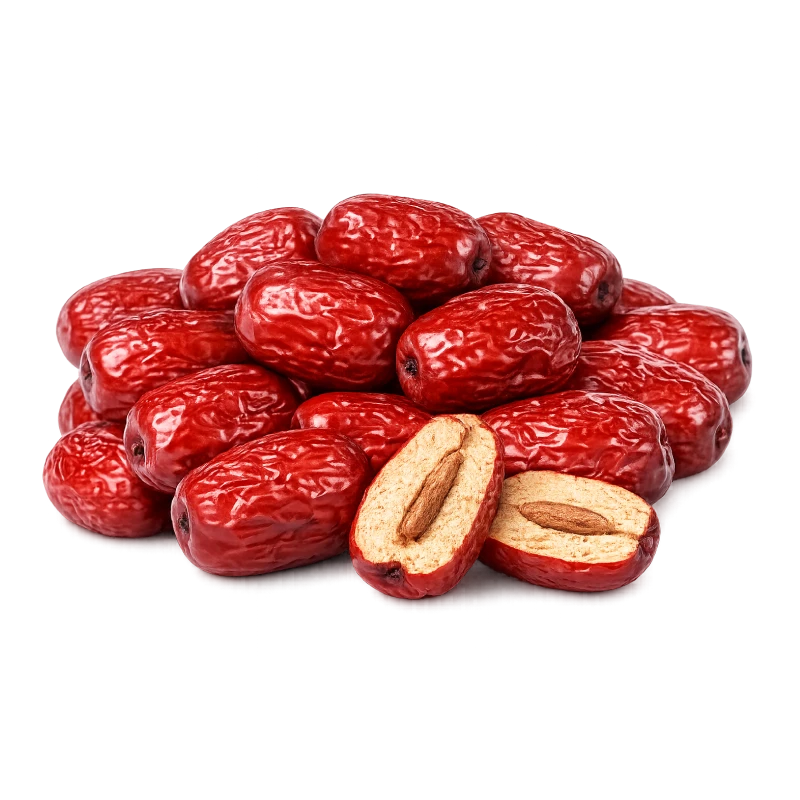
For example, a U.S. buyer sourcing Goji Berries may care about color, berry size, moisture, stems, broken pieces, and retail pack consistency. A buyer sourcing Red Dates may care about size grade, pits, sweetness, visual uniformity, and whether the product is better positioned for tea, soup, or snack use.
5. Be careful with health and wellness claims
Cantonese soup ingredients often sit near wellness, traditional food culture, and family cooking. That can be commercially useful, but it also creates regulatory and marketing risk if claims are too strong.
For U.S.-bound retail products, buyers should avoid turning food products into medical-style products through label or marketing language. Safer positioning usually focuses on:
- culinary tradition
- pantry use
- soup preparation
- family cooking
- seasonal merchandising
- ingredient pairing
- retail-ready convenience
For example, a Five Finger Fig Soup Mix can be positioned as a Cantonese-style soup mix for home cooking. That is cleaner than making disease, treatment, or therapeutic claims.
6. Decide whether the first order is for bulk, retail, or private label
Many import problems begin when the buyer changes the commercial plan after production starts. A bulk ingredient order, a retail grocery order, and a private label program need different preparation.
| Order type | Confirm before production |
|---|---|
| Bulk import | Grade, carton weight, inner bag, lot code, warehouse handling |
| Retail pouch | Label copy, barcode, net weight, case pack, shelf dimensions |
| Soup mix pack | Ingredient order, serving guidance, visible pack consistency, cooking notes |
| Private label | Artwork timeline, label responsibility, MOQ, print approval, lead time |
If the buyer plans to repack in the United States, bulk packaging may be enough. If the product will go directly to Asian grocery shelves, retail label and case-pack planning should happen before the final quotation.
7. Build a landed-cost view, not only a unit-price view
The cheapest unit price is not always the best import cost. Dried goods are light, bulky, and sensitive to packaging decisions. Carton efficiency can change margin quickly.
A serious landed-cost estimate should include:
- product unit price
- retail packaging or label cost
- export carton and inner packaging
- mixed-SKU loading efficiency
- ocean or air freight
- origin and destination handling
- customs broker fees
- duty and taxes where applicable
- warehouse receiving and local delivery
- relabeling or inspection-related delays if something is missing
For a first shipment, buyers often do better with fewer SKUs and cleaner carton logic. A focused mix of Goji Berries, Red Dates, and one soup mix can be easier to test than a broad assortment that complicates labeling, replenishment, and inventory.
8. Ask the supplier for shipment-ready details early
A supplier should help you make the order easier to quote, pack, and ship. Before deposit, ask for:
- product specification sheet or product summary
- sample photos or production reference photos
- retail pack dimensions if applicable
- carton size, gross weight, and net weight
- MOQ by product and by packaging format
- production lead time
- label or private label workflow
- available shipping terms such as FOB or CIF
- whether mixed-SKU consolidation is possible
These details help your broker, forwarder, warehouse, and sales team work from the same assumptions.
9. Keep the first U.S. shipment narrow and easy to verify
For first-time dried goods shipments, narrow usually beats complicated. Start with products that are easy to identify, easy to explain, and easy to reorder.
A practical first assortment might include:
- one familiar dried fruit such as red dates or dried figs
- one tea or wellness-adjacent ingredient such as goji berries
- one Cantonese soup mix with clear cooking use
- one retail or gift-pack format only if the label and carton plan are ready
This gives the buyer enough shelf variety without making import review, warehouse receiving, and sales feedback harder than necessary.
Buyer takeaway
For U.S. importers, a successful dried fruit or soup ingredient shipment depends on more than product quality. The stronger plan is to confirm product format, import basics, label direction, carton logic, and landed cost before production begins.
Canton Pantry supports wholesale dried fruits, food-grade botanicals, Cantonese soup mixes, and retail pack programs for buyers planning U.S. and North American channels. Browse our wholesale product catalog or send an inquiry with your target product format, expected order size, and launch market.
 Related products