For many North American buyers, postpartum recovery is still the most familiar entry point into Cantonese soup mixes. But if the next product round stays too focused on postpartum alone, the Cantonese soup mix assortment can become narrow, harder to merchandise, and harder to scale into repeat purchase.
For buyers sourcing Cantonese soup mixes for Canada or the US, the next growth step is usually not another narrower recovery SKU. It is a broader set of retail-friendly soup mixes that can fit seasonal programs, family pantry use, and easier-entry grocery shelves. Recent market signals point to exactly that shift. Buyers are not only looking at recovery-focused products. They are also showing interest in lighter seasonal soup mixes, more family-friendly pantry formats, and easier-entry products that do not require strong functional explanations. For Guangzhou-based suppliers and wholesale buyers, that changes the next decision. The goal is no longer just to find a stronger postpartum SKU. The goal is to choose the next soup mix lines that can travel into grocery shelves, specialty retail, and everyday pantry use more easily.
1. Why North American buyers should not stay too narrow after a postpartum launch
Postpartum remains an important demand signal, especially in Chinese and Asian diaspora channels. It is a category that buyers can explain clearly, and in some cases it has already been market-tested.
But there are three practical limits if buyers stay there for too long:
- the audience is narrower than a general family or grocery program
- the content and compliance language can become more sensitive
- expansion into wider retail channels becomes slower
That is why many buyers eventually need a second layer of products. The stronger second layer is usually not another more specialized recovery formula. It is a line of products that moves the category toward broader and more repeatable use.
In practice, that often means choosing products that feel:
- seasonal or occasion-based
- familiar enough for family cooking
- easier to explain without heavy claims
- suitable for Asian grocery, specialty retail, or trial bundles
2. What the next demand layer for Cantonese soup mixes looks like
If postpartum is the first doorway, the next demand layer usually comes from products that fit one of these three roles:
Role 1: seasonal recognition
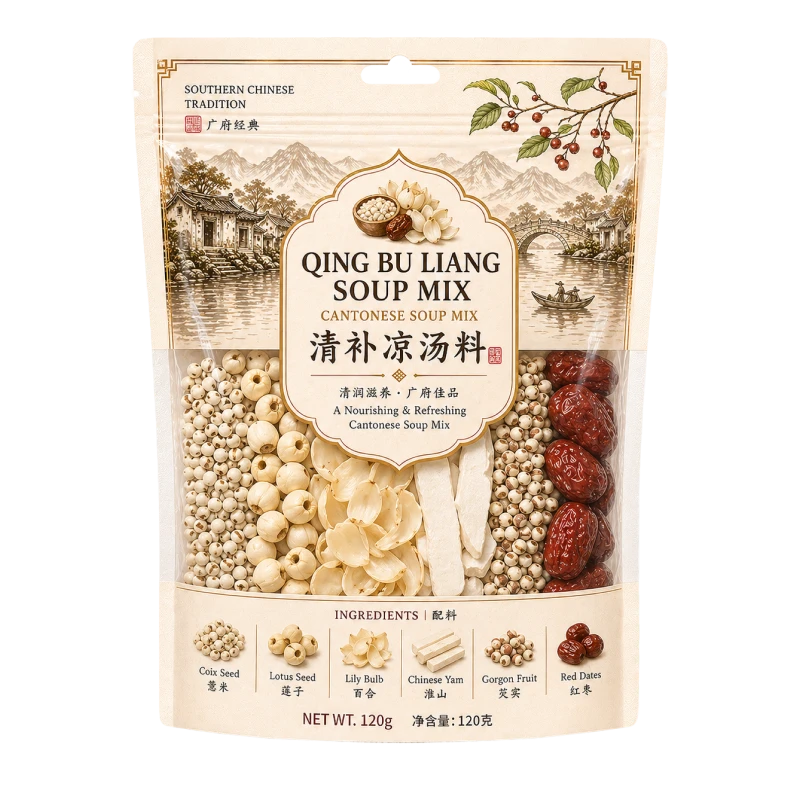
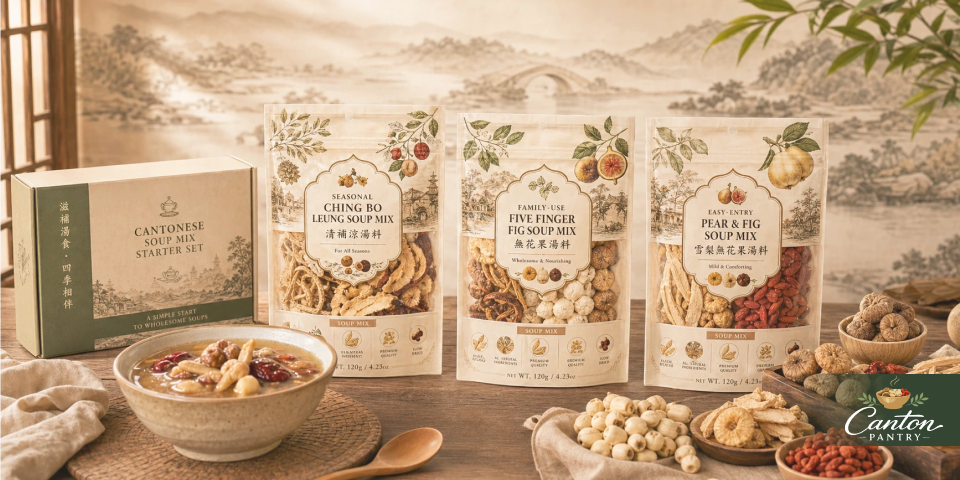
These are products buyers can position around seasonal merchandising, weather shifts, or traditional soup occasions. A product such as Ching Bo Leung Soup Mix fits this role because it is one of the more recognizable Cantonese-style soup directions and already carries a clear category identity.
Role 2: family pantry repeat purchase
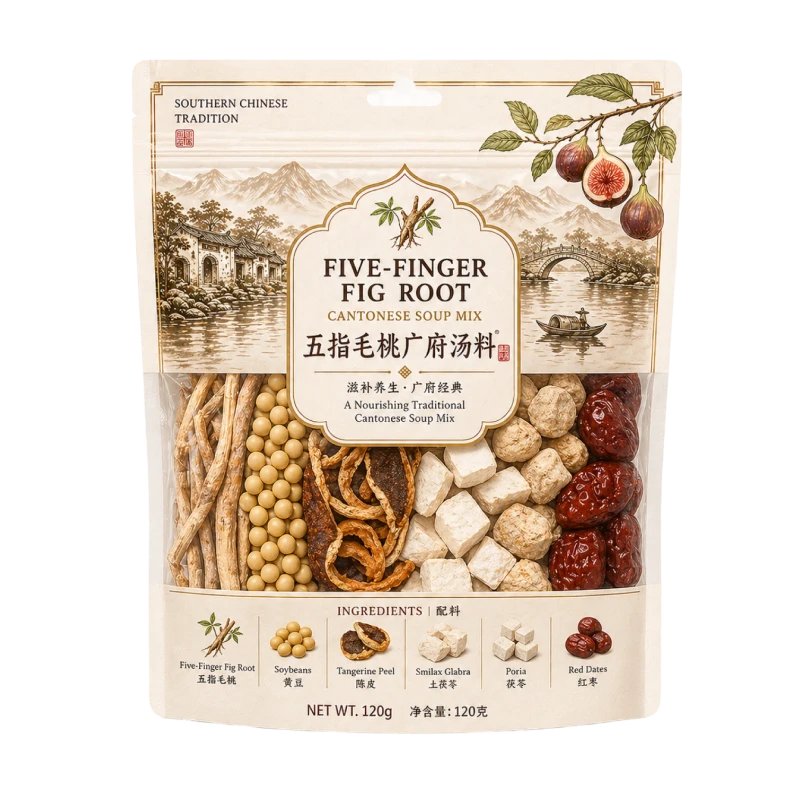
These are products that can live on the shelf as an everyday or weekly cooking option rather than a niche use case. Five Finger Fig Cantonese Soup Mix works well here because it feels more like a core family soup line than a one-time specialty purchase.
Role 3: easy-entry retail education
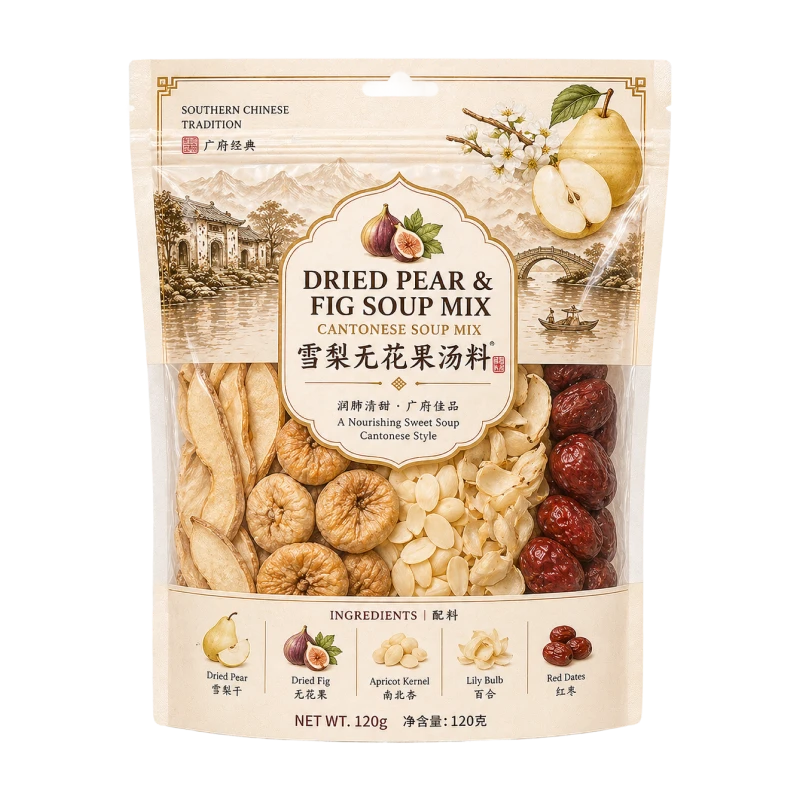
These are products that lower the explanation barrier for new customers. Pear & Fig Cantonese Soup Mix is a good example because the ingredient story is softer, more food-forward, and often easier for first-time shoppers to understand.
This three-role structure helps buyers move from a narrow therapeutic-style shelf story toward a broader pantry and retail story.
3. Why Canada may be the better first test market for Cantonese soup mixes
For many buyers, Canada is the easier place to test the next layer of Cantonese soup mixes before scaling a wider US rollout.
There are several practical reasons:
- Chinese and Cantonese food culture is often easier to contextualize in Canadian urban Asian grocery channels
- lower-ticket single-pack or multi-serving soup mixes may be easier to merchandise first
- family-use and seasonal soup positioning can be communicated without overbuilding a specialist wellness narrative
That does not mean the US is weak. The US can be a strong market for sharper positioning and clearer price ladders. But if the goal is to test whether the category can grow beyond postpartum, Canada may be the cleaner market for a first function-matrix experiment.
For many wholesale buyers, this leads to a useful sequencing rule:
- test broader lifestyle and family-use lines in Canada first
- test stronger price anchoring and segmented positioning in the US next
4. Three Cantonese soup mix directions North American buyers should test next
1. Ching Bo Leung and other light seasonal lines
Ching Bo Leung Soup Mix is one of the best next-step products for buyers who want a recognizable Cantonese category signal. It gives the shelf more local identity than a generic dried-fruit blend, but it is still easier to explain than more technical or specialist ingredient combinations.
This direction works especially well for:
- seasonal shelf programs
- Cantonese soup education displays
- Asian grocery buyers who want a recognizable named product
It can also help buyers move the conversation away from a single postpartum shelf into a broader "Cantonese soup occasions" shelf.
2. Five finger fig as an everyday family line
Five Finger Fig Cantonese Soup Mix is one of the strongest candidates for a repeat-purchase line. It feels closer to family pantry use and weekly cooking than a niche functional product.
That matters because the next real growth stage after an initial launch is usually not more novelty. It is repeatability.
This direction is useful for:
- family cooking programs
- repeat pantry sales
- retail shelves that need one clear hero SKU
If a buyer wants one soup mix that can act as a core line rather than only a seasonal test, this is often the safer choice.
3. Pear and fig as an easier-entry retail bridge
Pear & Fig Cantonese Soup Mix works well when buyers want a product that feels softer, more food-led, and easier for first-time customers to read.
This direction is especially useful when the target customer is not already deeply familiar with Cantonese soup ingredients. The ingredient story is more approachable, and the product can sit more naturally in gift, family grocery, or beginner trial programs.
This makes it valuable for:
- first-time Cantonese soup customers
- bundle or sample programs
- retail buyers who want lower education friction
5. How to position Cantonese soup mixes for North American retail
One of the most important decisions is not only which formula to choose, but how to name and present it.
In many North American channels, buyers are better served by leading with:
- soup occasion
- family use
- serving format
- ingredient transparency
instead of trying to force every product into stronger functional language.
For example, a buyer may find it easier to sell:
- a light seasonal Cantonese soup mix
- an everyday family soup mix
- a fruit-forward beginner soup blend
than to lead with language that sounds too technical, too narrow, or too compliance-sensitive.
This does not mean removing all category identity. It means presenting the identity in a way that supports retail clarity.
6. A practical first test structure for Canada and US buyers
For buyers building the next round after postpartum, a practical test can look like this:
- 1 recognizable seasonal SKU
- 1 family repeat-purchase SKU
- 1 easier-entry or beginner-friendly SKU
A useful example would be:
This is a better test than adding many more specialized products at once. It keeps the shelf logic clear, gives buyers multiple demand angles, and makes reorder signals easier to interpret.
Conclusion
The next growth step for Cantonese soup mixes in North America is usually not deeper specialization. It is broader usability.
Postpartum may still be the strongest entry point, but it should not be the only one. Buyers who want to build a more durable soup mix program should look next at seasonal recognition, family pantry repeat purchase, and easier-entry retail education. That is where products such as Ching Bo Leung Soup Mix, Five Finger Fig Cantonese Soup Mix, and Pear & Fig Cantonese Soup Mix can play a much bigger role.
If you are planning the next stage of a Cantonese soup mix assortment for Canada or the US, browse our soup mix catalog or send an inquiry with your target market, channel type, and preferred pack format.
 Related products