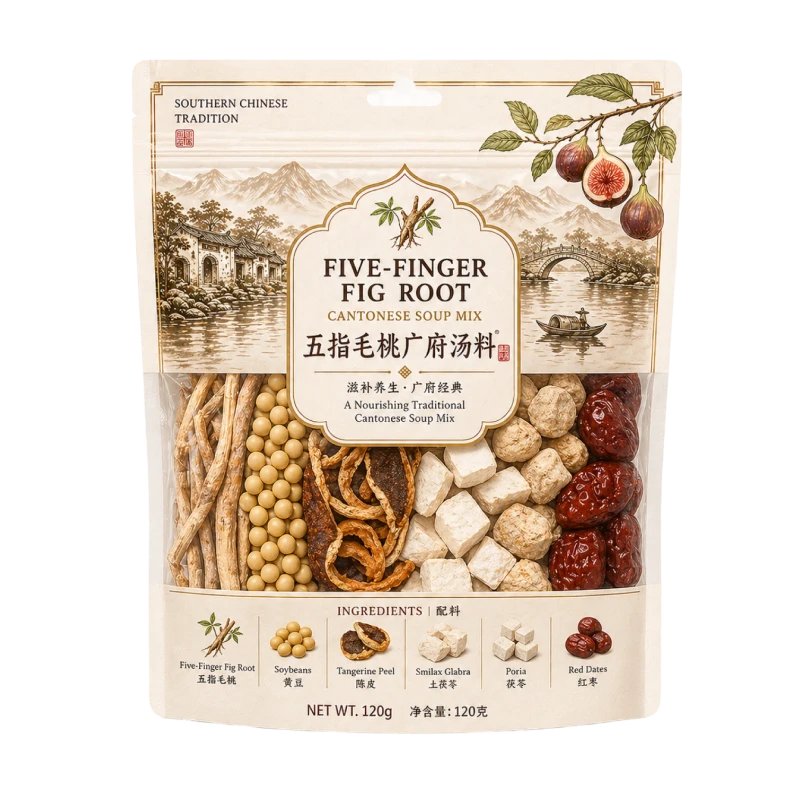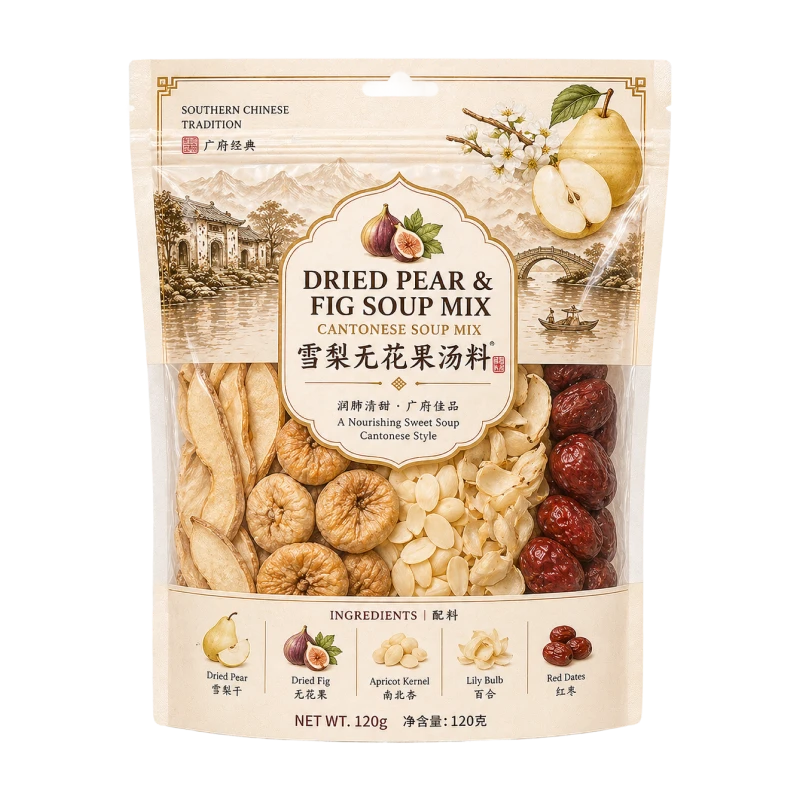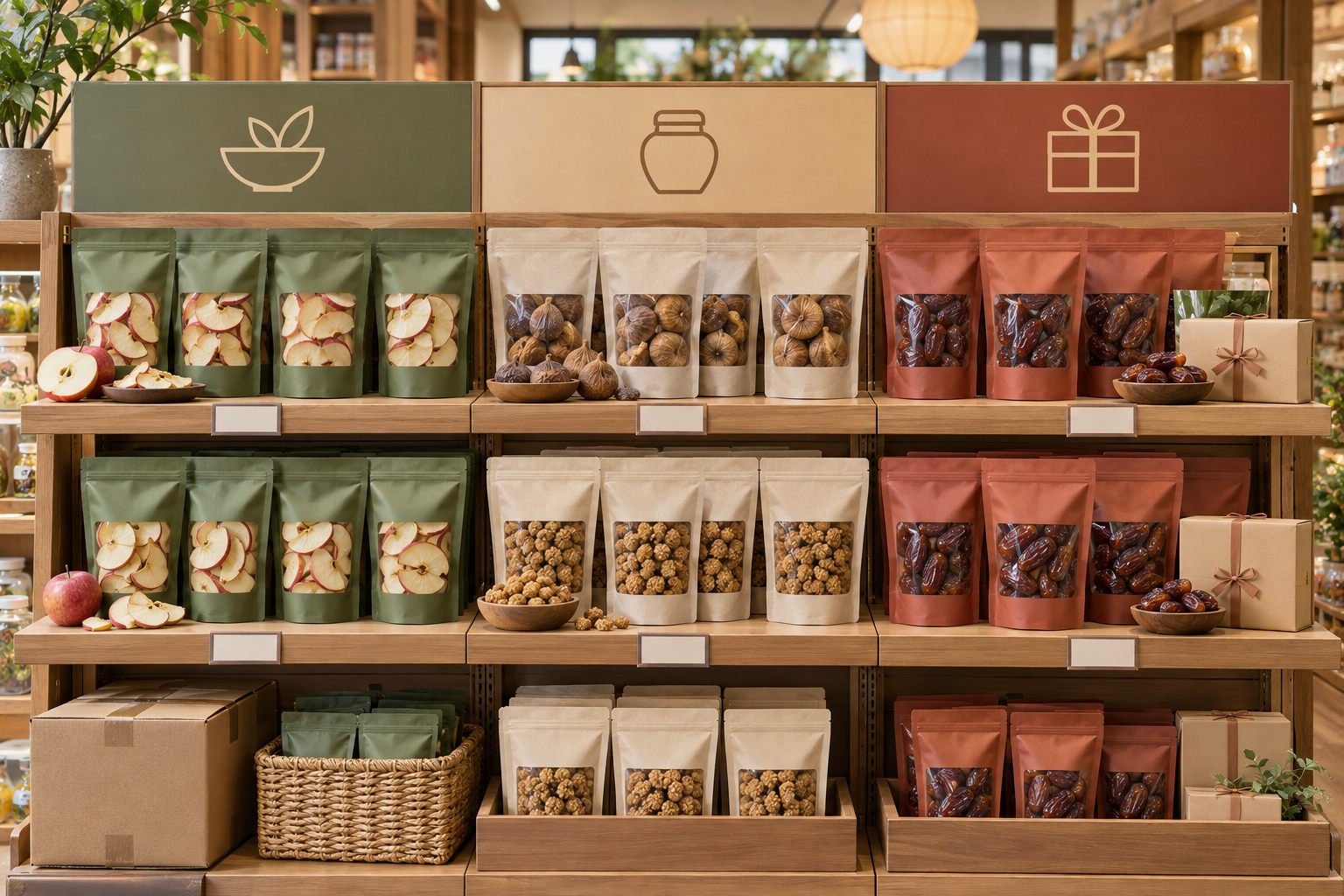
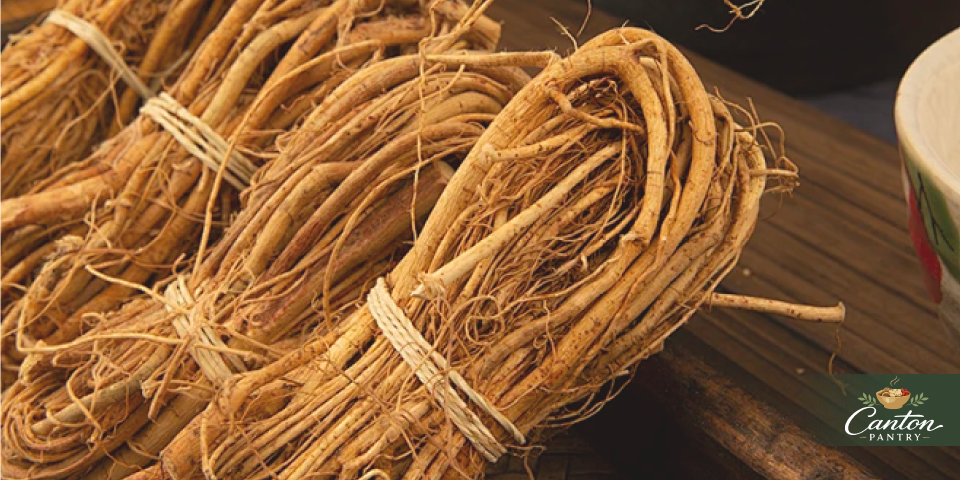
Five finger fig is one of the most useful bridge ingredients in Cantonese soup. It is recognizable to Chinese-speaking shoppers, but still approachable enough for newer customers when paired with familiar dried ingredients. For North American buyers, that makes it one of the best candidates for a repeat-purchase soup mix SKU rather than just a niche seasonal item.
Buyers looking at Cantonese soup mixes often search for products that can do two jobs at once. The first is to carry enough regional identity to feel authentic. The second is to stay easy enough to explain on a retail shelf without relying on complicated functional language. Five Finger Fig Cantonese Soup Mix sits in that middle space very well. It has a clear Cantonese pantry identity, but it can also be positioned as a family soup base, an everyday simmer soup, or an entry-level traditional blend.
1. Why five finger fig works so well in Cantonese soup mixes
Five finger fig is useful because it gives the soup a distinctive character without making the formula too difficult for buyers to merchandise. Compared with more technical ingredient stories, it feels warm, familiar, and easier to package into an everyday cooking product.
For retail buyers, that matters for three reasons:
- it can support repeat pantry purchase instead of one-time novelty
- it can be explained through pairing and flavor instead of heavy claims
- it works well in both single-SKU testing and bundled soup mix programs
This makes it stronger as a core soup mix direction than many narrower specialty formulas.
2. What ingredients pair best with five finger fig
In Cantonese soup, five finger fig is often paired with ingredients that soften the learning curve and round out the flavor story. The most practical pairings for retail development usually include:
- Chinese Yam
- dried figs
- red dates
- honey dates
- Apricot Kernels
- poria cocos
- lotus seeds
These ingredients help buyers build formulas that feel balanced, familiar, and easier to name on-pack. For example, pairing five finger fig with Chinese yam and dried figs creates a more food-led blend. Pairing it with red dates can make the formula feel friendlier to family cooking. Adding apricot kernels or lotus seeds can move the formula toward a more classic Cantonese soup identity.
3. Which five finger fig combinations North American buyers should test first
For a first product round, buyers are usually better off testing two or three clear combinations instead of building one overly crowded recipe.
Combination 1: five finger fig, Chinese yam, and dried fig
This is one of the easiest combinations to introduce because the ingredient story feels familiar and food-forward. It works well for family cooking, beginner shoppers, and general Asian grocery retail.
Combination 2: five finger fig, red dates, and apricot kernels
This combination carries a stronger traditional Cantonese soup identity while still staying readable on shelf. It is a good choice when the buyer wants one hero SKU that feels more rooted in soup culture.
Combination 3: five finger fig, lotus seeds, and poria cocos
This is better for buyers serving shoppers who already understand dried soup ingredients. It can work well in specialty retail, gift-oriented assortments, or deeper soup mix catalogs.
A good first test usually keeps the ingredient count controlled, the naming simple, and the pack story easy to scan.
4. How retailers can turn five finger fig into a stronger SKU
The commercial value of five finger fig is not only in the raw ingredient. It is in how easily it can become a small product line.
Retailers can often build around it in stages:
- one core everyday soup mix
- one beginner-friendly food-led version
- one more traditional Cantonese pairing
- one bundle or sampler linked with Pear & Fig Cantonese Soup Mix
This staged approach lowers first-order risk and makes reorders easier to interpret. Instead of launching many unrelated soup mixes at once, buyers can use five finger fig as a product anchor and then expand around it.
5. Why five finger fig is a good entry point for North American shelves
For North American retail, not every Cantonese soup product needs to be positioned as a highly specialized wellness formula. In many cases, a better path is to lead with ingredients, cooking occasions, and household usability.
Five finger fig works well in that framework because it can be presented as:
- a home-style Cantonese soup mix
- an everyday family soup base
- a traditional dried ingredient blend with approachable pairings
That makes it suitable for Asian supermarkets, cross-border e-commerce, trial bundles, and curated gift programs. It also gives the buyer a clearer route from testing into repeat purchase.
Conclusion
For buyers building a Cantonese soup mix assortment, five finger fig is one of the most practical ingredients to develop into a core SKU. It pairs well with ingredients such as Chinese Yam, dried figs, red dates, and Apricot Kernels, and it can be positioned in ways that feel both traditional and shelf-friendly.
If you are planning a first five finger fig product line for Canada or the US, explore our soup mix catalog or send an inquiry with your preferred pack format and target market.
 Related products