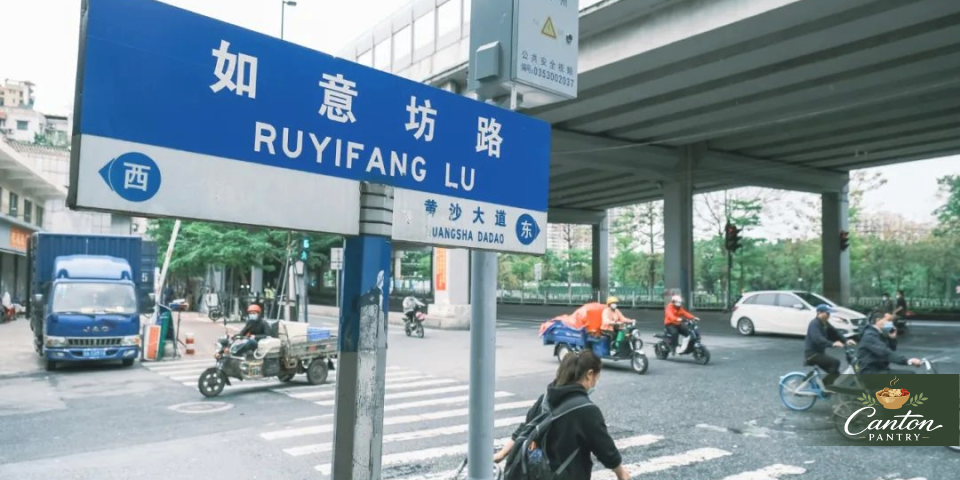
Ruyifang is worth writing about not because it is simply old, but because it layers together Guangzhou's waterfront, trading habits, and everyday life in one compact district.
When people mention Ruyifang, they often think first of an old neighborhood in Liwan. But once you arrive, the experience is more mixed than nostalgic. There is the flyover overhead, the traffic noise, the market frontage, the smell of dried goods drifting out of the shops, and the unmistakable rhythm of a place that still functions instead of merely being remembered. For a site like Canton Pantry, Ruyifang matters because it helps explain where Guangzhou's dried-goods culture comes from and why soup ingredients are still embedded in local commerce.
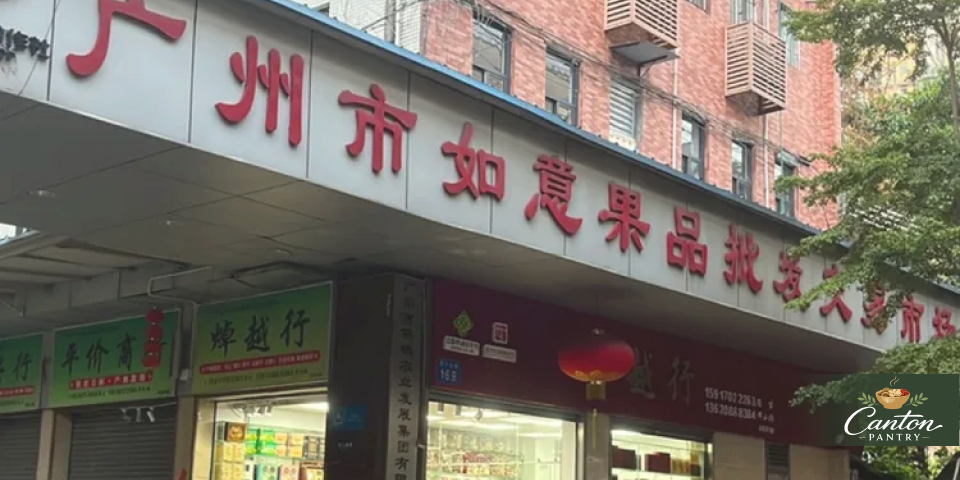
1. A place that still feels in use
Ruyifang does not feel like a preserved exhibit. It feels like a working layer inside the city. Shoppers still come for practical reasons. Shopkeepers still sort, pack, quote, and move goods with the efficiency that old wholesale districts tend to keep long after the skyline changes around them. The appeal is not visual perfection. It is the sense that local trade, neighborhood habits, and supply-chain routines are still sharing the same streets.
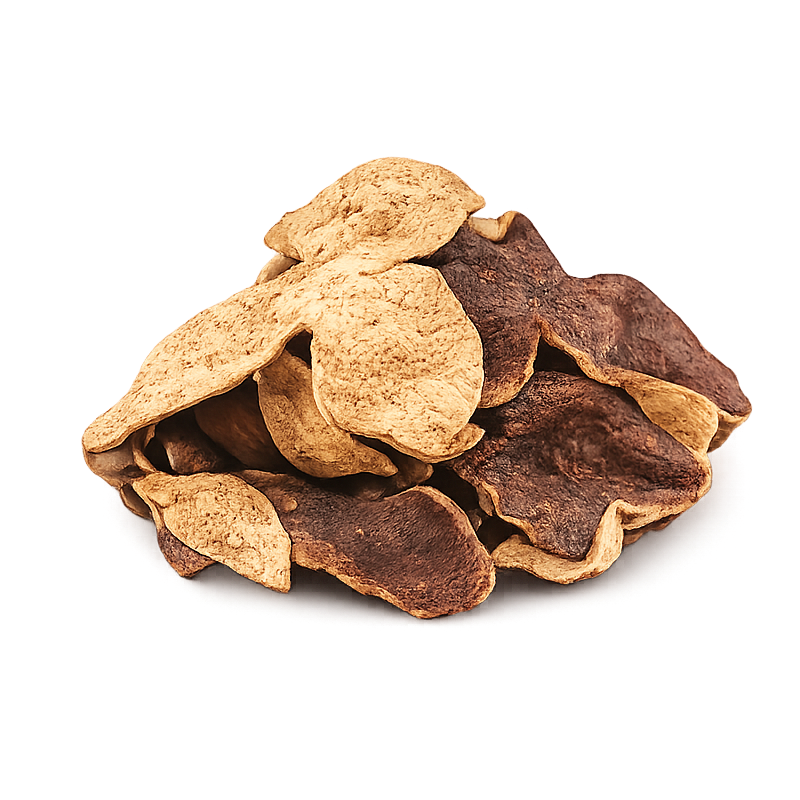
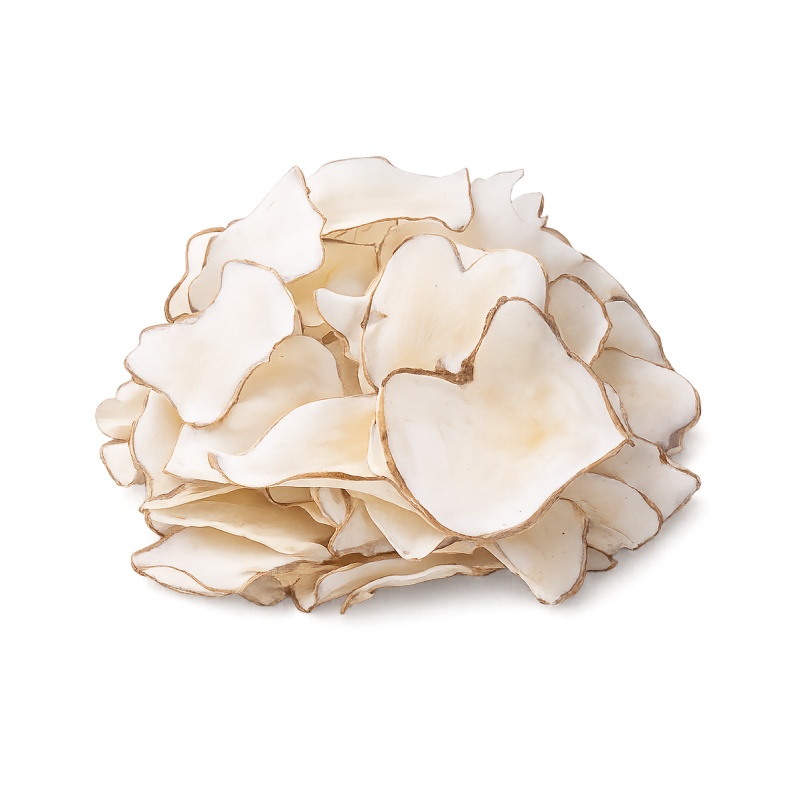
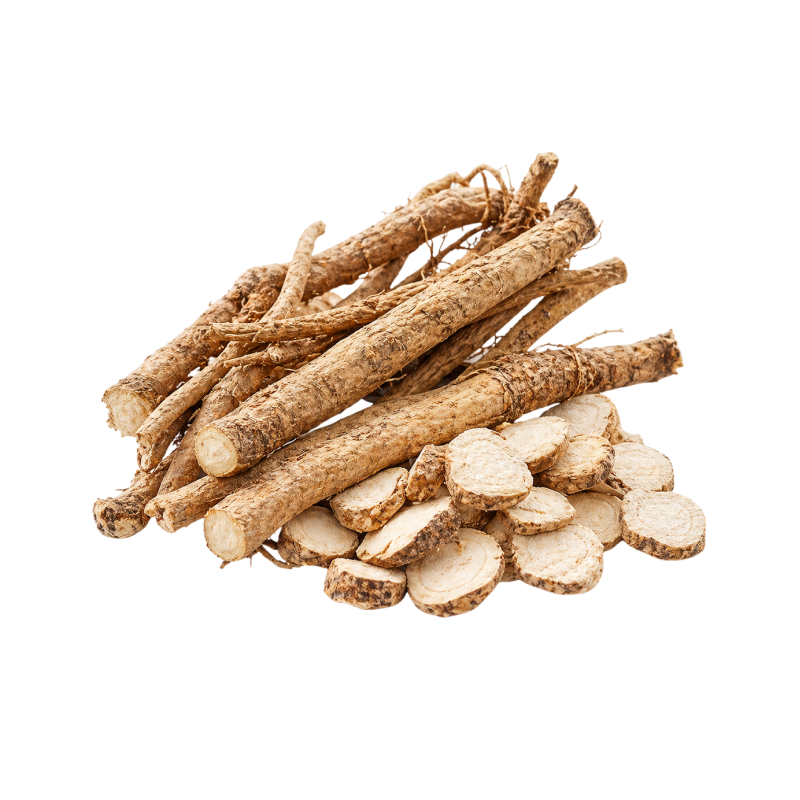
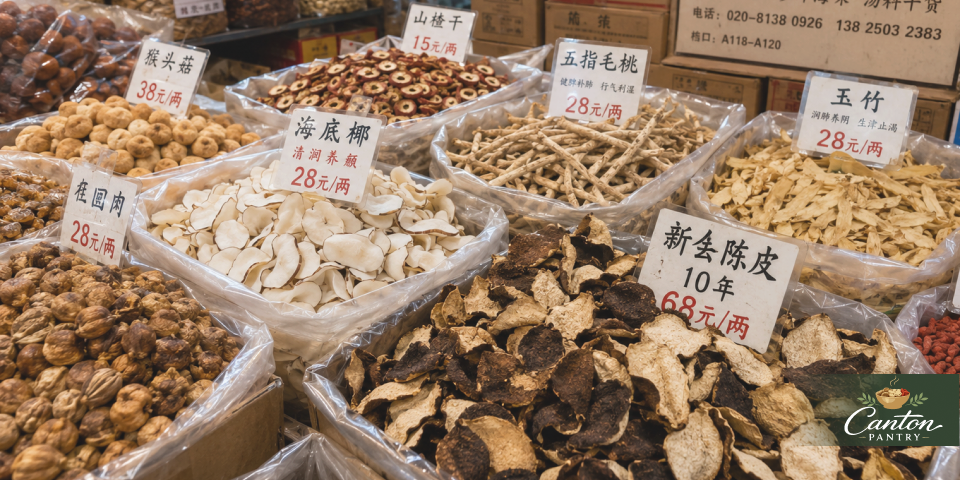
That mix is part of what makes the district useful to understand. A buyer looking at Guangzhou from a distance may only see product categories such as Dried Tangerine Peel, Sea Coconut, or Five Finger Fig Root. But on the ground, those products are tied to a deeper system of market memory, regional food culture, and repeat household demand. Ruyifang is one of the places where that connection becomes visible.
2. The place name begins with water
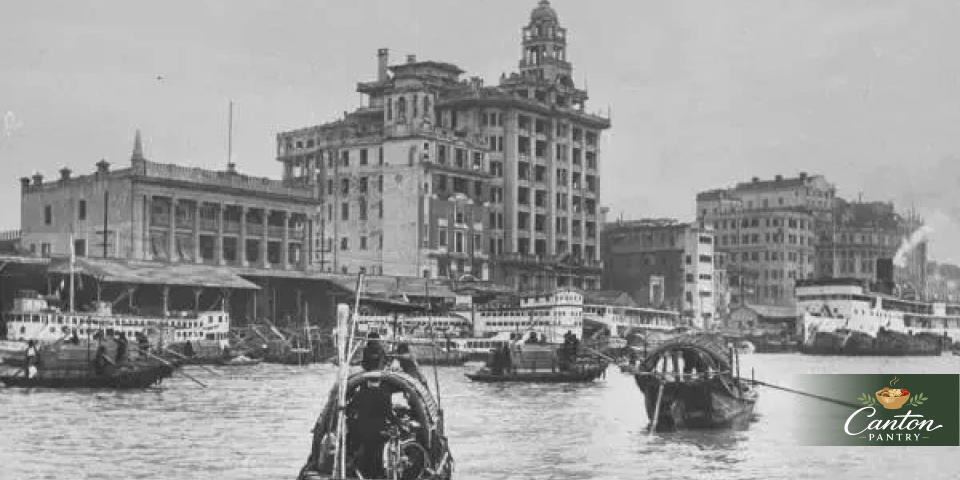
According to a Guangzhou government article published on January 25, 2023, Ruyifang was originally a sandbank by the Pearl River. In the early twentieth century, embankment works reshaped the shoreline, and a street market gradually developed. The name "Ruyifang" carried a simple local blessing: may things go smoothly, may life be favorable, may business be steady.
That origin matters because it tells us that Ruyifang was never accidental. Like many older districts in Guangzhou, it grew because water created access. Riverfront locations brought cargo movement, loading and unloading, temporary storage, and daily flows of people. Before the district became a memory, it was first a logistics and livelihood zone.
3. From timber and fish to dried goods and soup ingredients
The same January 25, 2023 government article notes that Ruyifang was once known for timber trading and pond-fish wholesale. Today, the product mix is different, but the commercial role is still recognizable. The district remains associated with dried-goods circulation, and recent public information shows how strongly soup ingredients have become part of its identity.
On September 30, 2025, Changhua Subdistrict announced the opening of the first Cantonese soup-ingredient food culture carnival connected to the Ruyifang business circle. The official notice described a supply network of more than one hundred soup ingredients across markets such as Xingzhouyuan Ruyi Fruit Market, Guangwu Fruit and Dried Goods Market, and Guangsheng Ruyi Dried Fruit Market. On January 16, 2026, another official update reported a New Year fair for the "Ruyifang Cantonese Soup Ingredient Town," framing the area as a place where cultural experience, industry display, and public retail demand meet.
In other words, the goods changed over time, but the district's underlying role did not. Ruyifang is still a place where circulation matters. It gathers ingredients, traders, wholesalers, retailers, and family cooking habits into one compact market geography.
4. Why the district still feels unmistakably Guangzhou
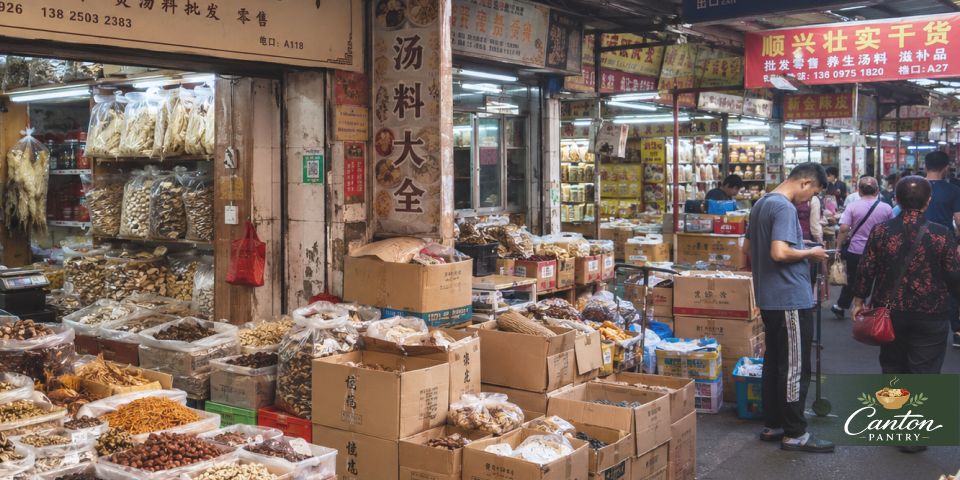
What gives Ruyifang its Guangzhou character is not only architecture. It is also sensory and practical. The smell of tangerine peel, medicinal pantry ingredients, sea coconut, dried fruit, and packaged soup mixes can sit in the same air. The language of trade is direct. Customers often come with a use case in mind: a home soup, a pantry refill, a seasonal gift, or a specific ingredient combination.
That is why districts like this still matter to buyers and product planners. Cantonese dried-goods demand is rarely abstract. It lives inside soup-making habits, family gifting, neighborhood replenishment, and the quiet confidence shoppers place in ingredients they already know how to use. A place like Ruyifang helps explain why products linked to soup culture continue to have durable shelf logic.
5. Ruyifang is also being rewritten by urban change
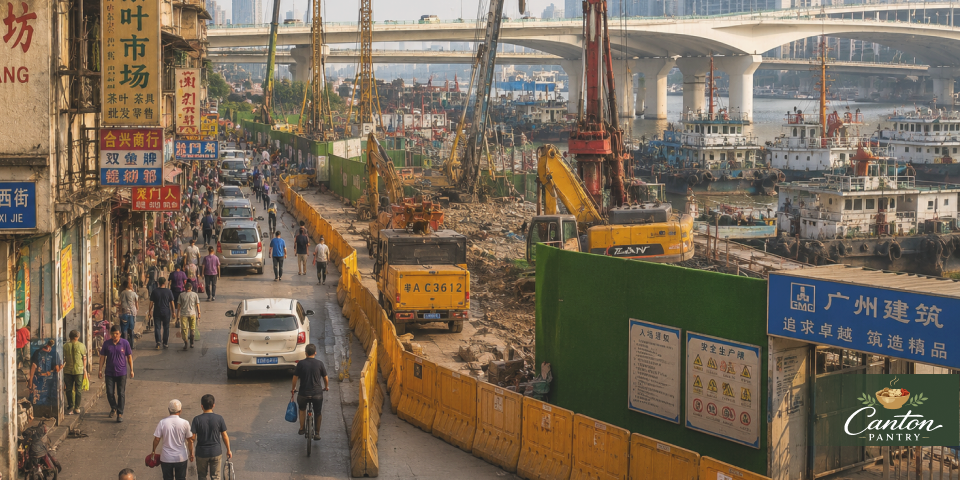
Ruyifang is not only a market story. It is also a current urban-infrastructure story. On June 25, 2025, the Liwan District government published an update on the Ruyifang radial road system project, describing phase one as a route starting at the Ruyifang Interchange on the Inner Ring Road and extending southwest under the Pearl River toward Fangcun Avenue. On February 14, 2026, the Guangzhou municipal government reported progress on land-title confirmation work for the Ruyifang wharf site, noting that the site is connected to the phase-one project and other surrounding construction tasks.
This means that today's Ruyifang is being shaped by two timelines at once. One timeline belongs to older market habits, older place names, and older food routes. The other belongs to new transport corridors, land reorganization, and district-level redevelopment. The tension between those timelines is precisely what makes the area worth documenting now.
6. What Ruyifang means for Cantonese dried-goods sourcing
For buyers, Ruyifang is not just a local story. It is a reminder that dried-goods sourcing in Guangzhou is tied to place, habit, and category knowledge. Products do not become reliable sellers only because they look good in a catalog. They work because they belong to a market ecosystem that has trained generations of shoppers to understand how they are used.
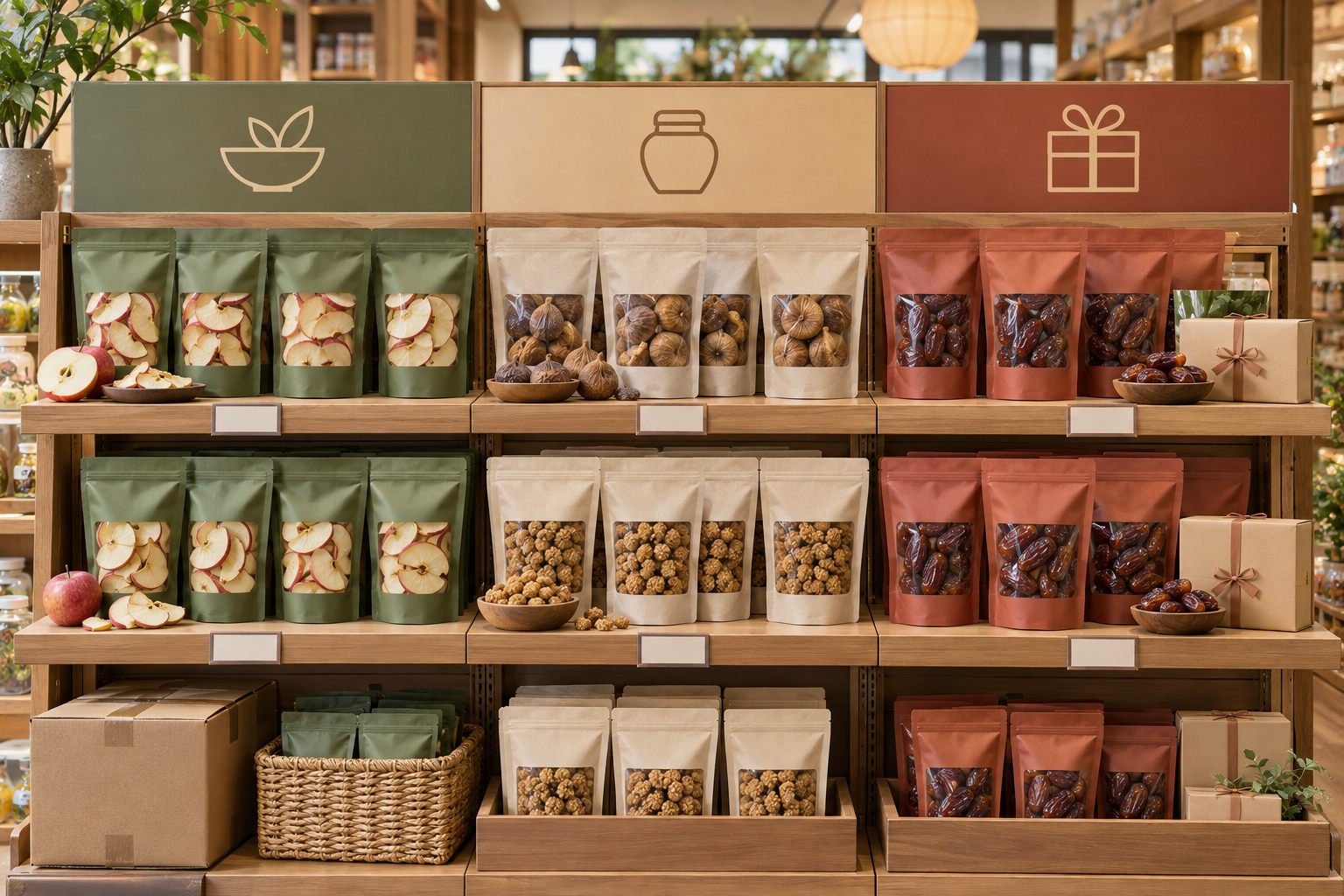
That is why it helps to view Guangzhou's soup-ingredient trade from both directions: from the shelf and from the city. On the shelf, a buyer sees SKU choices and packaging formats. In the city, those same products belong to a longer chain of river trade, wholesale clustering, and neighborhood food culture. Ruyifang makes that chain easier to see.
If you are exploring Cantonese dried goods for retail, gifting, or soup programs, you can browse our product catalog or send an inquiry with your target market, pack format, and first-order plan.
Sources
- Guangzhou Government: "Auspicious and as desired - place names with good fortune" (January 25, 2023)
- Liwan District Government: Ruyifang radial road system project (June 25, 2025)
- Guangzhou Government: title confirmation work for the Ruyifang wharf site (February 14, 2026)
- Liwan District Government: 2026 New Year fair for Ruyifang Cantonese Soup Ingredient Town (January 16, 2026)
 Related products