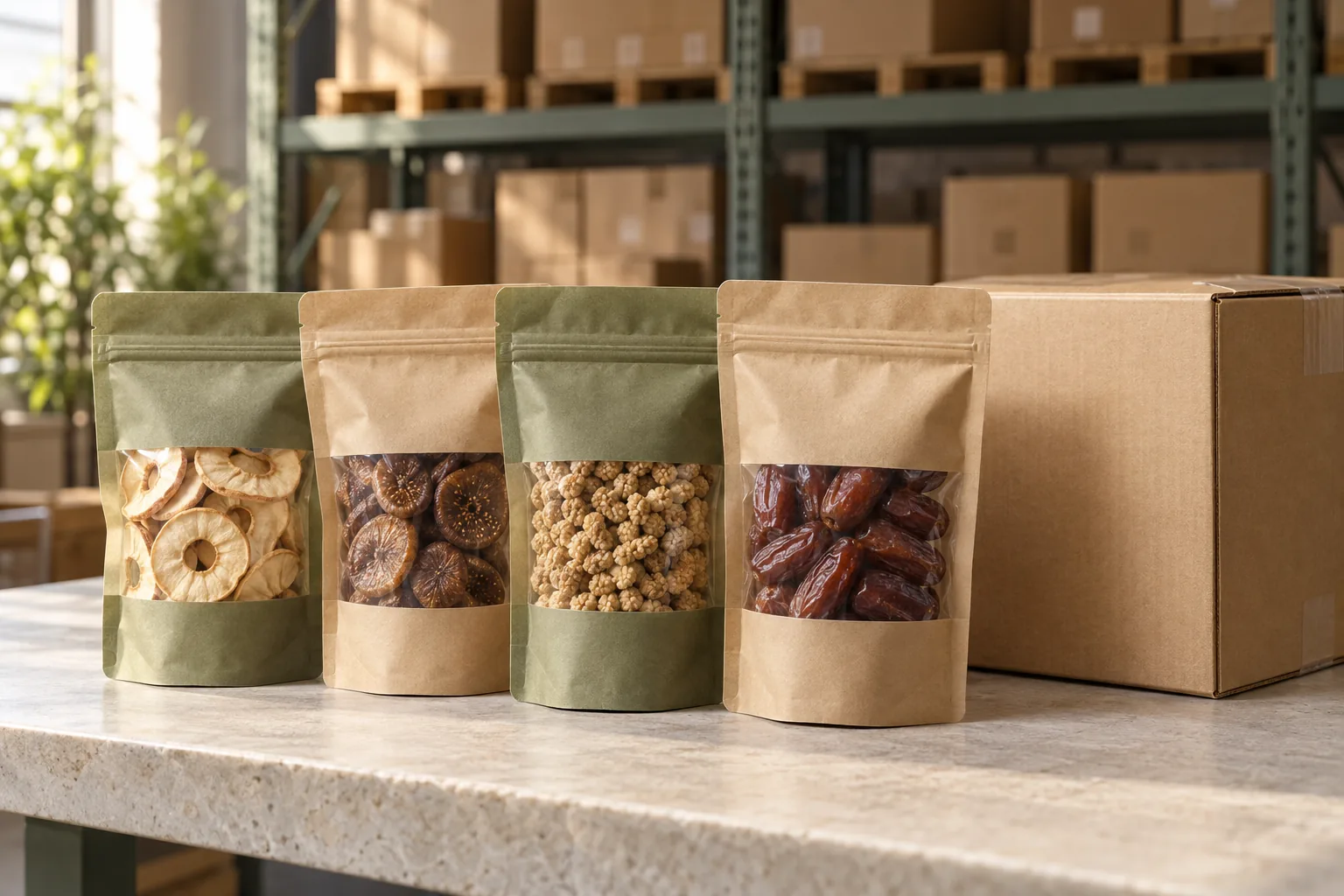
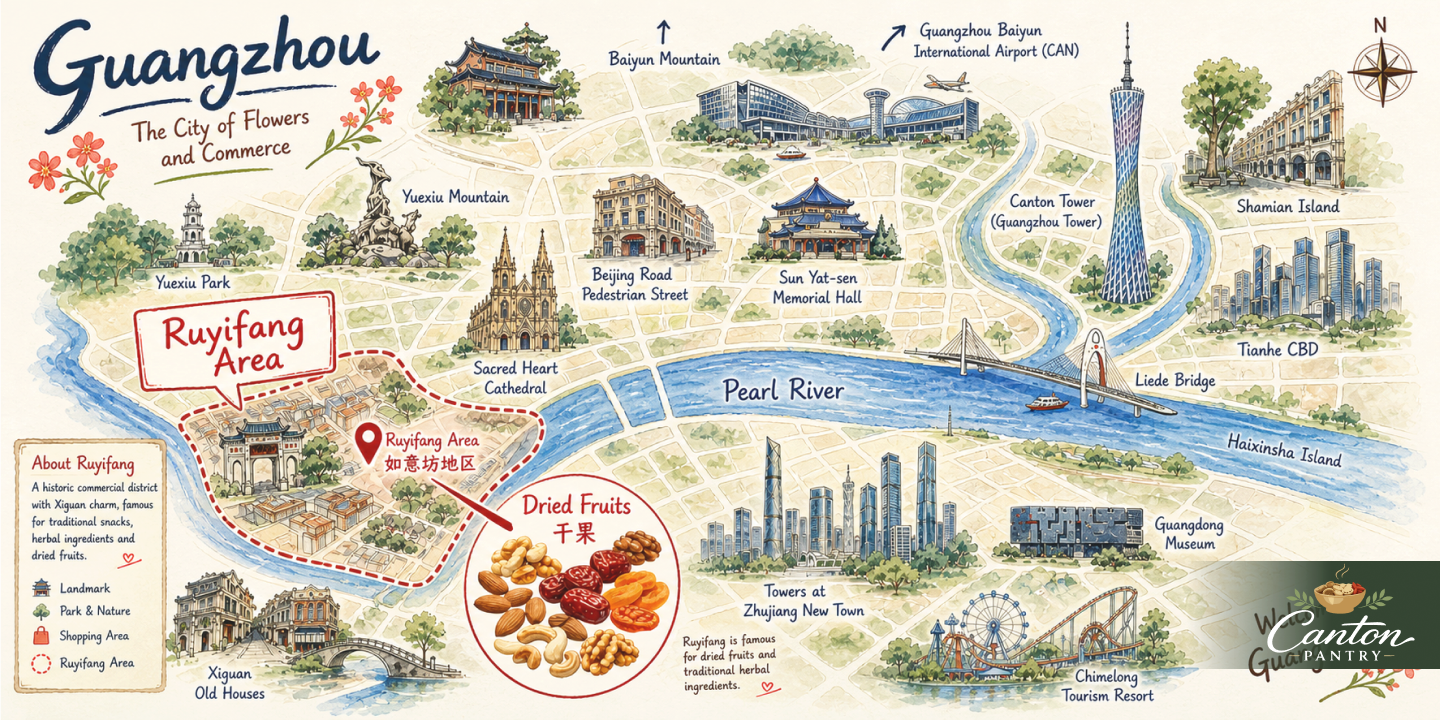
Guangzhou is one of the most useful sourcing bases for dried fruit buyers because it connects wholesale markets, packing resources, mixed dried goods suppliers, logistics providers, and export support in one trading city.
For overseas Asian grocery stores, distributors, specialty food brands, and importers, the challenge is not simply finding dried fruit. The real challenge is choosing marketable SKUs, checking whether a supplier can support repeat orders, and turning market products into retail-ready cartons or packs.
This guide explains how to source dried fruit from Guangzhou wholesale markets in a practical B2B way.
Why Guangzhou works for dried fruit sourcing
Guangzhou has a strong dried goods trading ecosystem. Buyers can compare dried fruits, soup ingredients, food-grade botanicals, retail packs, and gift-pack formats within the same sourcing trip.
For dried fruit buyers, Guangzhou is useful because:
- wholesale markets make it easier to compare quality and price quickly
- suppliers often handle mixed dried goods, not only one single item
- packaging, labeling, carton planning, and local logistics are easier to coordinate
- Cantonese dried goods and soup ingredient categories can be sourced together
- buyers can test retail-ready products before building a larger import program
This is especially helpful for buyers who need a mixed assortment rather than one full container of a single product.
Start with a clear product list
Before contacting suppliers, define the product role. Are you sourcing for snack shelves, pantry shelves, gift packs, repacking, or soup ingredient sections? The same product can require a different grade, moisture level, cut, pack size, or carton plan depending on the channel.
Good dried fruit products to evaluate include:
| Product | Best retail role | What to confirm |
|---|---|---|
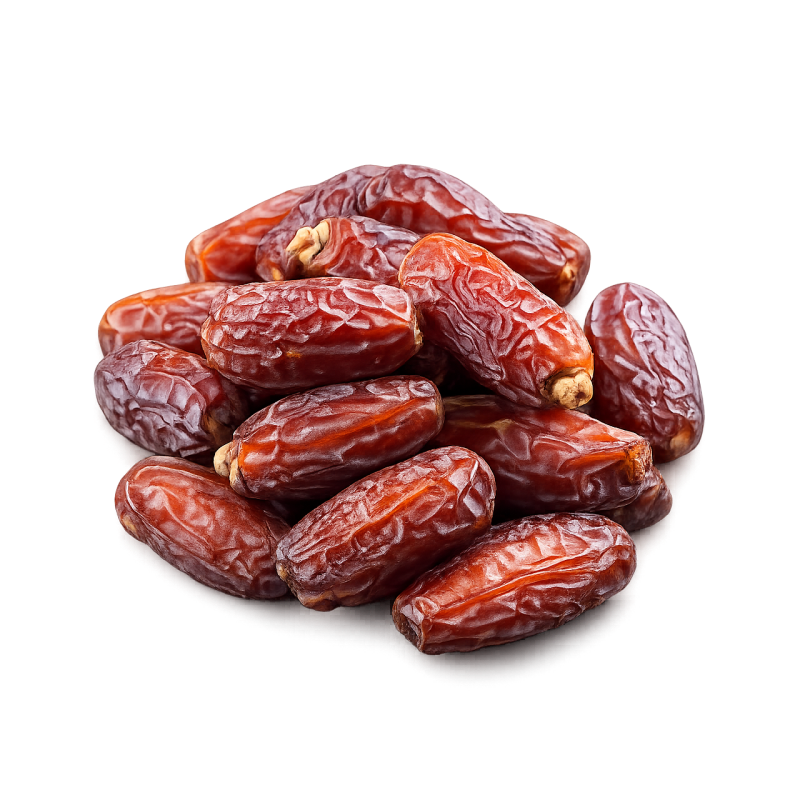
| Dried Dates | Snack shelves, pantry packs, gift packs | Size, sweetness, moisture, pitting, pack format |
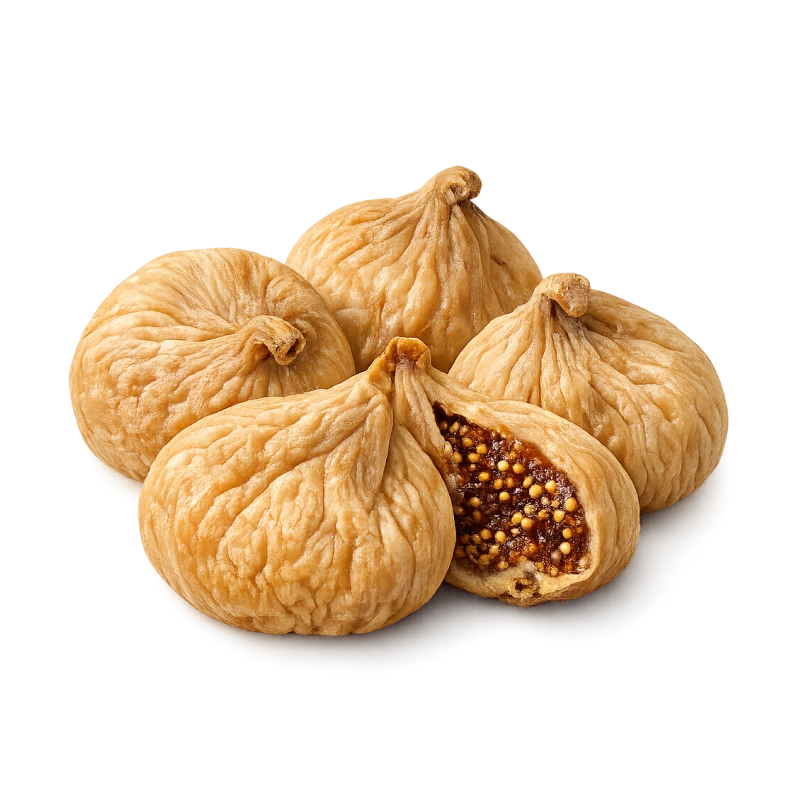
| Dried Figs | Premium dried fruit shelves and mixed packs | Origin style, color, texture, stem handling |
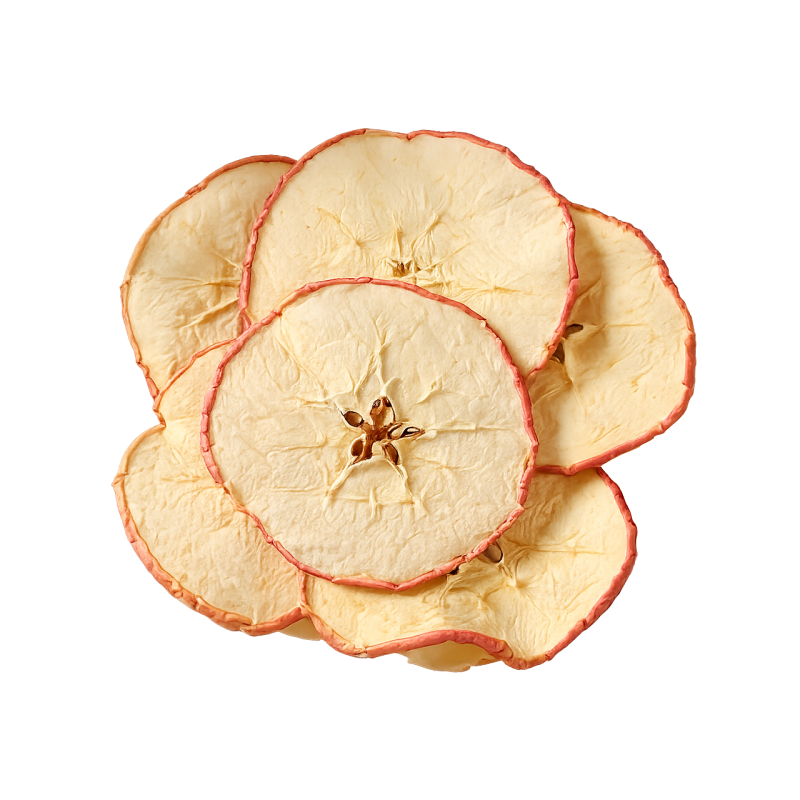
| Dried Apple Slices | Light snack shelves and family packs | Slice thickness, dryness, breakage, sweetness |
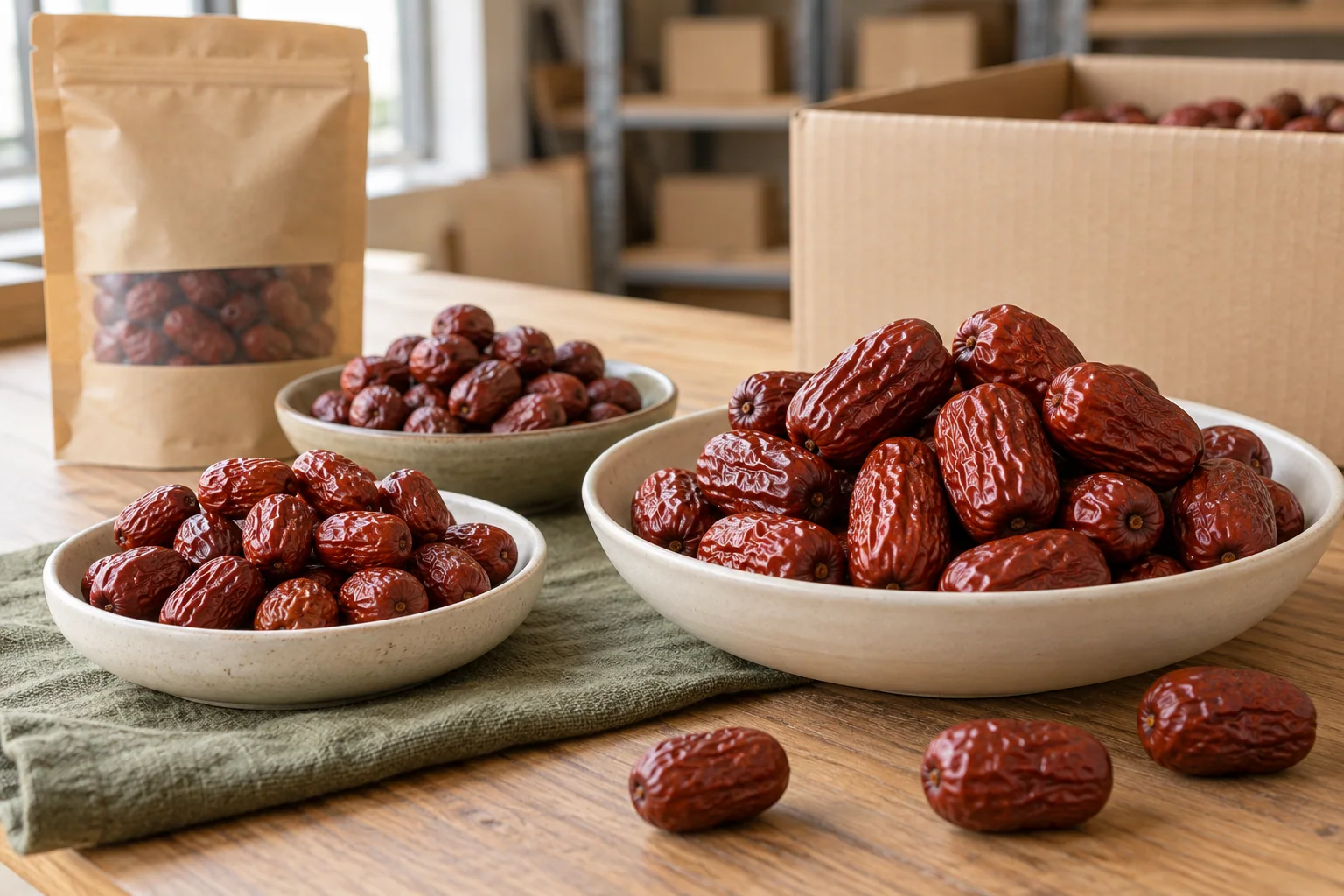
| Red Dates | Tea, soup, pantry, and wellness shelves | Size grade, seed handling, dryness, carton count |
| Goji Berries | Tea, soup, and wellness combinations | Berry size, color, moisture, retail pack stability |
A focused product list makes supplier conversations more efficient. It also prevents the first sourcing round from becoming a long list of products without a clear sales plan.
Visit the market with quality standards, not only target prices
Wholesale markets are useful because buyers can compare products side by side. But the lowest price is rarely the best starting point for retail buyers. A cheaper grade may lead to more breakage, weaker shelf appearance, shorter practical shelf life, or more customer complaints.
When reviewing samples, check:
- visual consistency across the bag or carton
- aroma, dryness, and texture
- broken pieces, dust, stems, or uneven sizing
- whether the product looks good through retail packaging
- whether the same quality can be repeated after the sample order
- whether the supplier can explain grade differences clearly
If the supplier cannot explain why two grades have different prices, be careful. For B2B buying, price only matters when the grade and use case are clear.
Ask how the supplier handles repeat orders
A market supplier may be able to sell one batch, but retail buyers need repeatability. Before confirming an order, ask how the supplier controls consistency from sample to shipment.
Useful questions include:
- Is the sample from current stock or only a display sample?
- Can the same grade be reserved or repeated for a larger order?
- What is the usual carton weight and carton size?
- Can the supplier support private label or neutral packaging?
- Can the supplier combine dried fruits with soup ingredients or gift packs?
- How are quality issues handled after goods arrive?
For importers, it is also important to know whether the supplier understands export packing, label preparation, and shipping documentation coordination.
Confirm packaging early
Packaging should not be left until the end. Dried fruit packaging affects shelf presentation, carton planning, label space, barcode placement, and shipping efficiency.
Common options include:
- bulk cartons for distributors, repackers, and food service buyers
- clear retail pouches for grocery shelves
- stand-up pouches for premium snack positioning
- mixed dried fruit packs for trial and gift displays
- gift boxes for seasonal retail programs
If you plan to sell through Asian grocery stores, confirm pack size, shelf width, carton quantity, and label language before placing the larger order. A good product in the wrong pack size can still be difficult to sell.
Use samples to test both product and retail logic
Samples should not only answer “Does this taste good?” They should answer whether the SKU can work in your channel.
A useful sample review should check:
- product grade and appearance
- retail pack size and shelf presentation
- label language and product name clarity
- estimated landed cost and retail price range
- whether the product fits your first-order assortment
For Asian grocery buyers, samples are also useful for building a first shelf plan. You may compare Dried Dates, Dried Figs, Dried Apple Slices, Red Dates, and Goji Berries before deciding the first shipment mix.
Plan the first order conservatively
The first order should prove the sourcing model. It does not need to include every possible SKU.
A practical first dried fruit order may include:
| Order part | Purpose |
|---|---|
| 2-3 familiar dried fruit SKUs | Test shopper recognition and repeat purchase |
| 1-2 pantry or tea-use SKUs | Connect dried fruit with household use |
| 1 mixed pack or gift-pack option | Test display value and seasonal opportunity |
| Extra sample items | Prepare the next reorder conversation |
After one or two selling cycles, the buyer can expand the fastest-moving items and reduce slow-moving trial SKUs.
Buyer takeaway
Sourcing dried fruit from Guangzhou wholesale markets works best when the buyer brings a clear product list, checks quality beyond price, confirms packaging early, and treats the first order as a controlled retail test.
Canton Pantry is based near Guangzhou's dried goods trading ecosystem and supports buyers with dried fruit selection, Cantonese pantry products, retail packs, gift sets, samples, carton planning, and export-ready order coordination.
Browse our dried fruit catalog or send an inquiry if you want help planning a Guangzhou dried fruit sourcing program.
 Related products