Guangdong soup culture is also a practical retail story: shoppers need clear ingredients and cooking guidance, while buyers need packaging, carton, MOQ, and lead-time details.
In many Guangdong homes, a meal often begins not with the first bite of rice, but with the first bowl of soup. That habit says a great deal about how Lingnan food culture understands climate, time, ingredients, and care.
Soup in Guangdong is not a side detail added at the end of cooking. It is a daily structure. A pot may be started hours before dinner, adjusted to the season, and prepared with a quiet awareness of who is coming home to eat. That is why talking about Guangdong soup culture is not only about flavor. It is about a way of organizing family life through food.
1. Why soup became so important in Guangdong
Guangdong's climate helps explain why soup took such a central place at the table. The Lingnan region is warm, humid, and rich in produce for much of the year. Local cooking therefore developed a strong preference for balance, clarity, and ingredients that feel appropriate to the season instead of heavy sauces or overly aggressive seasoning.
That is also why many Cantonese soups taste light at first sip but reveal depth over time. The goal is not to overpower the palate. It is to let ingredients come together patiently. In that sense, soup expresses one of the core values of Cantonese cooking: restraint with precision.
2. Old fire soup is the emblem, but not the whole picture
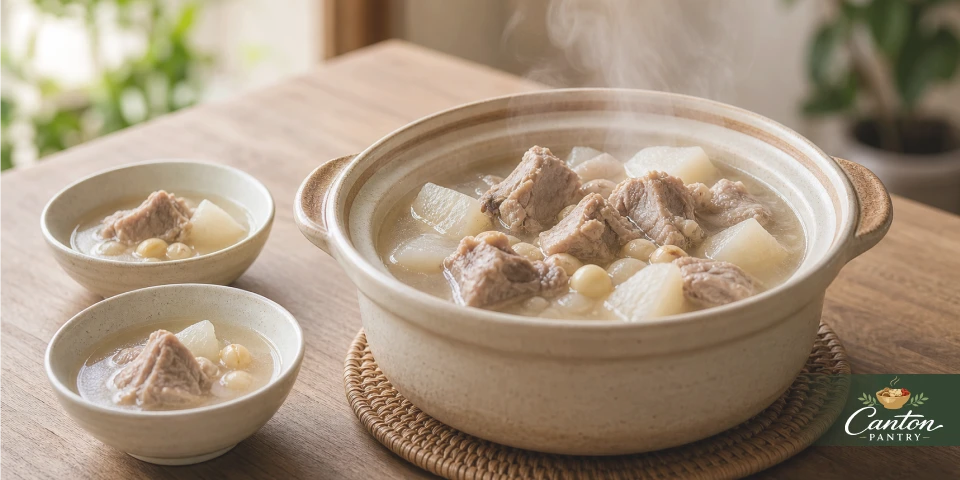
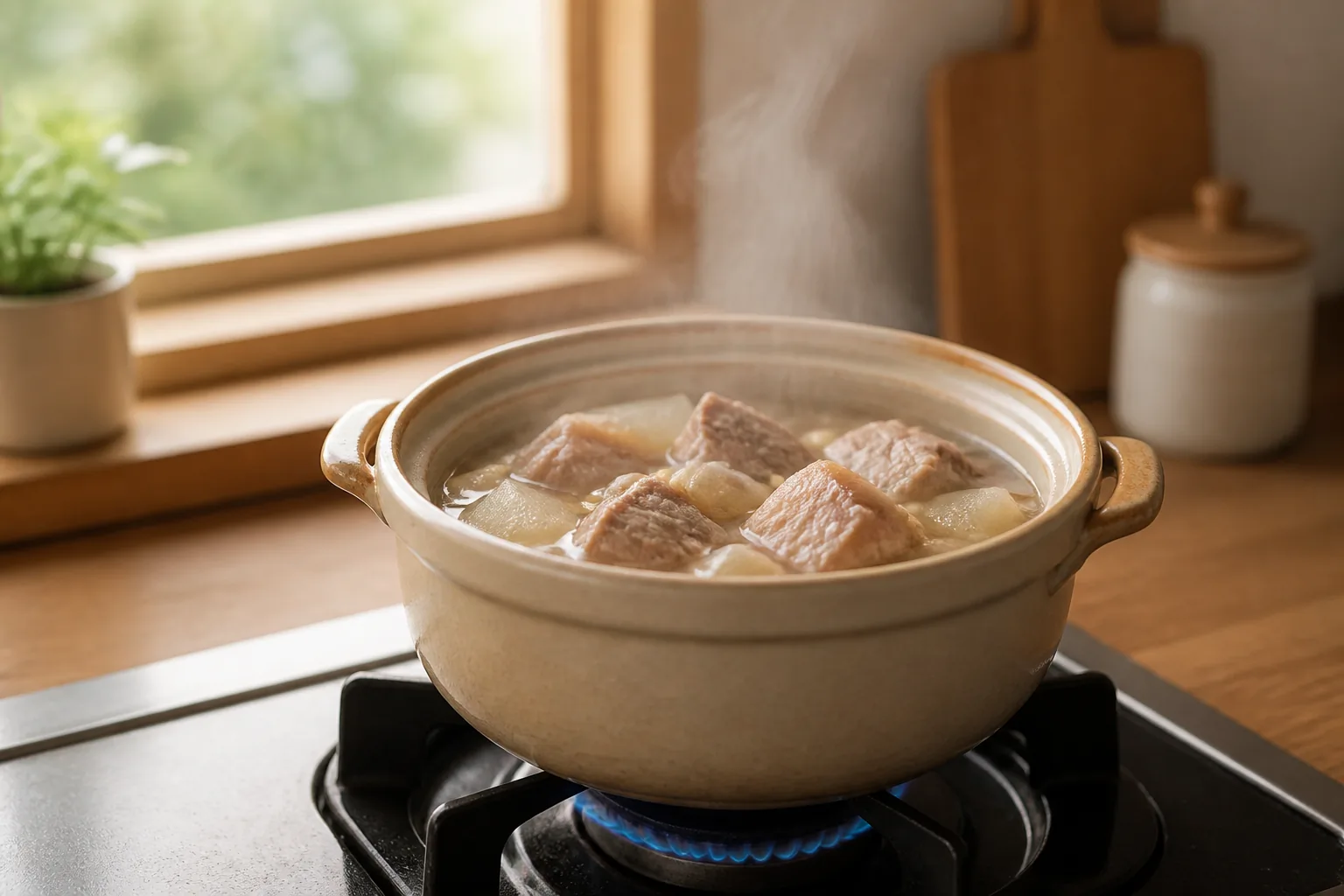
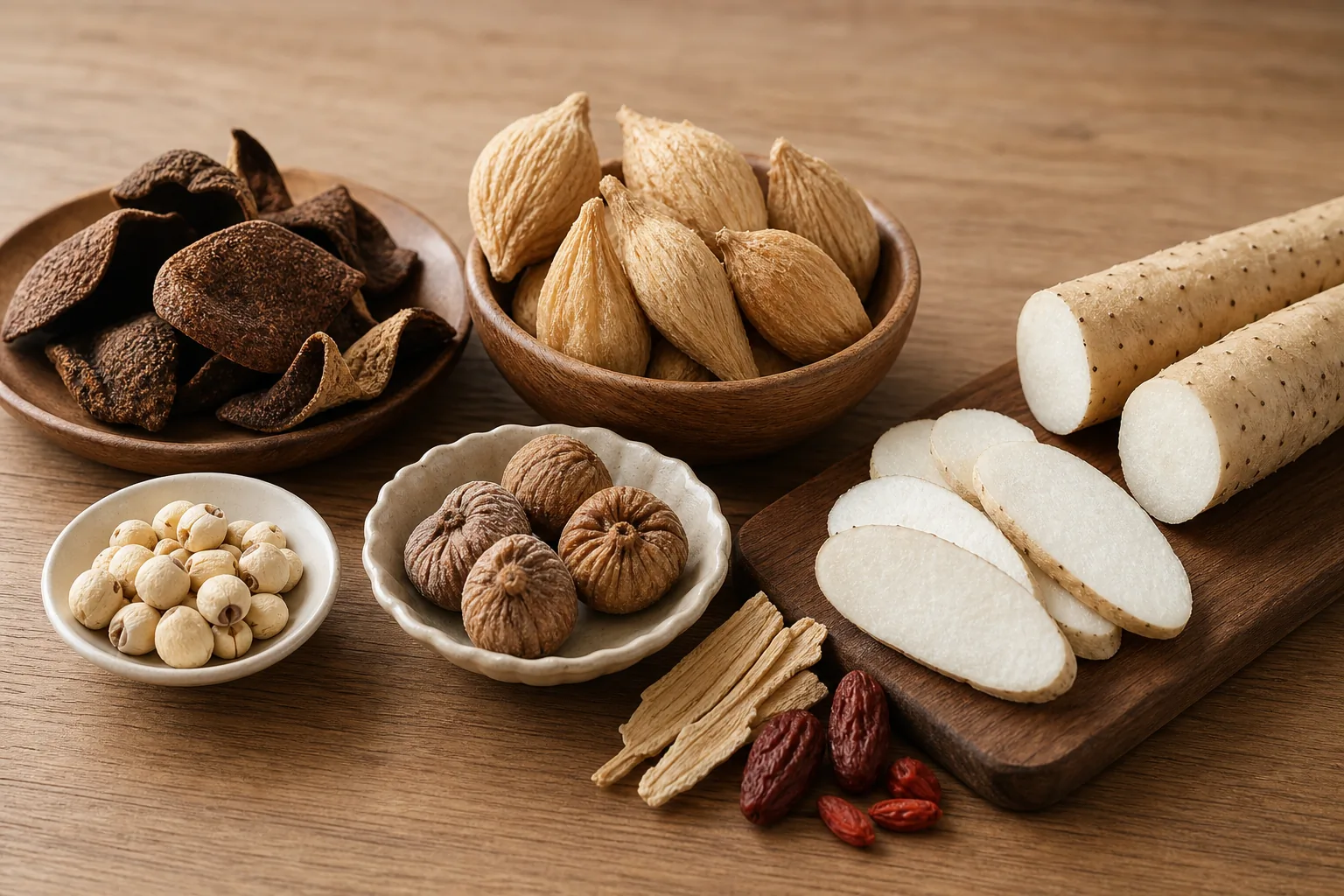
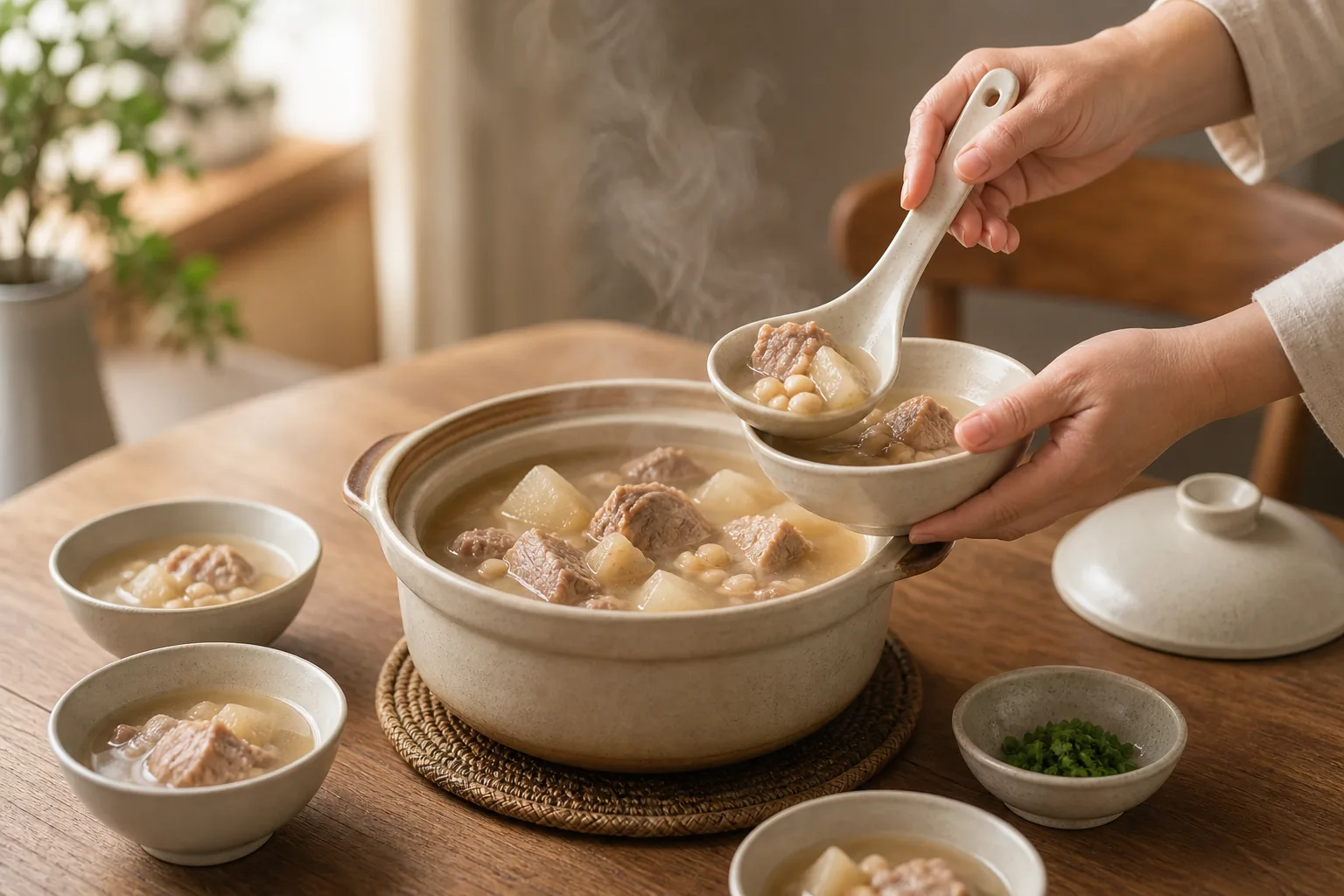
When people outside Guangdong think of Cantonese soup, they usually think first of old fire soup. The name refers to a pot that is simmered gently for hours so the aroma, texture, and sweetness of the ingredients can slowly merge into the broth. Pork bones, chicken, dried figs, lotus root, Chinese yam, or herbs may all appear depending on the household and the season.
Old fire soup matters because it turns time itself into part of the recipe. It rewards planning. It rewards patience. It also carries a very different rhythm from quick weekday cooking.
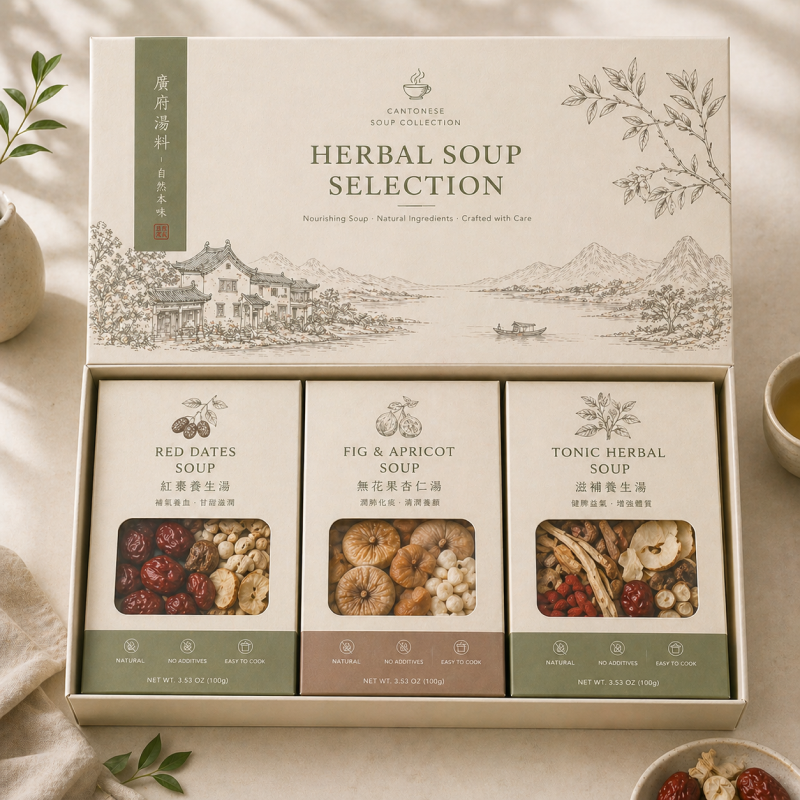
At the same time, Guangdong soup culture is much broader than one technique. There are fast rolling soups for ordinary lunches, clear double-boiled soups for a more delicate texture, and combination soups that simplify preparation for busy households. Products such as Cantonese Soup Starter Set show how that tradition continues in more convenient modern formats without losing the underlying food logic.
3. Ingredients reflect Lingnan food wisdom
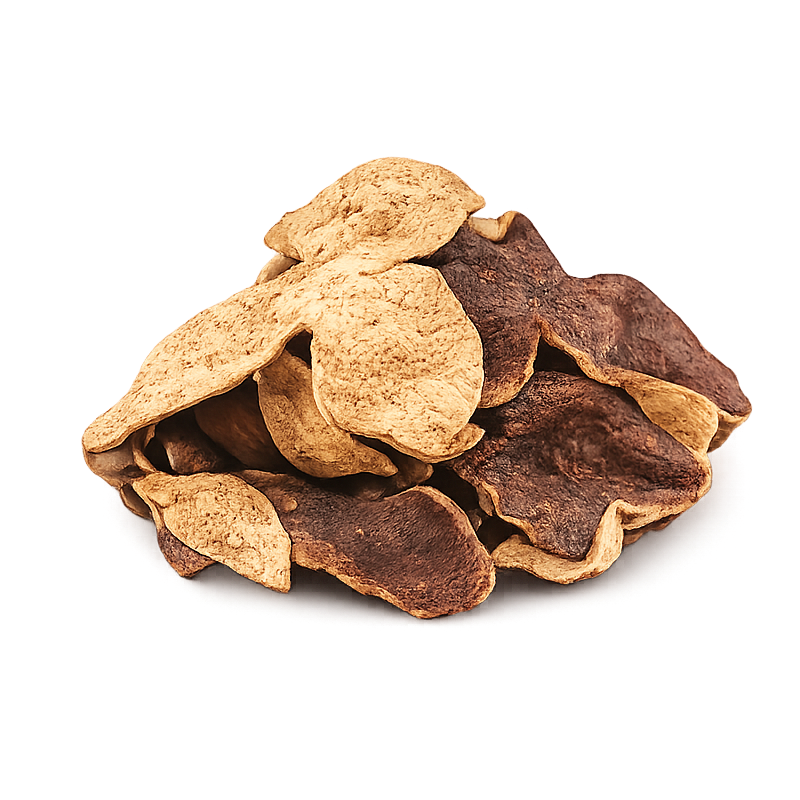
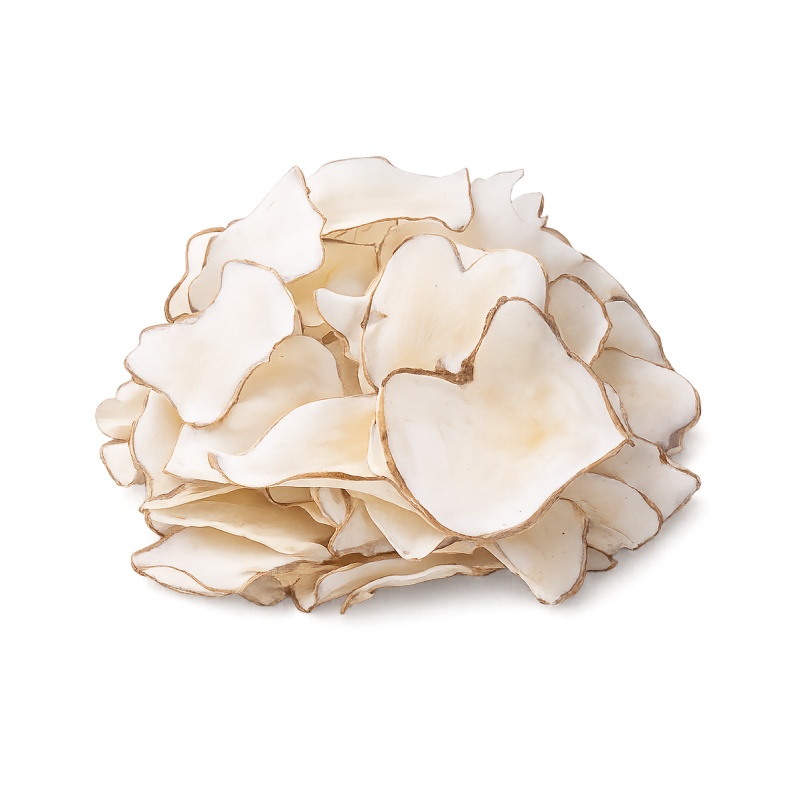
One reason Guangdong soups remain so distinctive is the way ingredients are combined. Meat and bones build body, but the identity of the soup often comes from the supporting ingredients. Items such as Dried Tangerine Peel, Sea Coconut, dried figs, Chinese yam, winter melon, lily bulb, lotus seeds, and five finger fig root each bring a different aroma, texture, or seasonal association.
What matters is not simply adding more ingredients. A good Cantonese soup is usually remembered for proportion and fit. It should feel clear but not thin, nourishing but not heavy, familiar but not repetitive. Many families keep their own combinations, and those combinations often pass quietly from one generation to the next.
4. Guangdong soup changes with the seasons
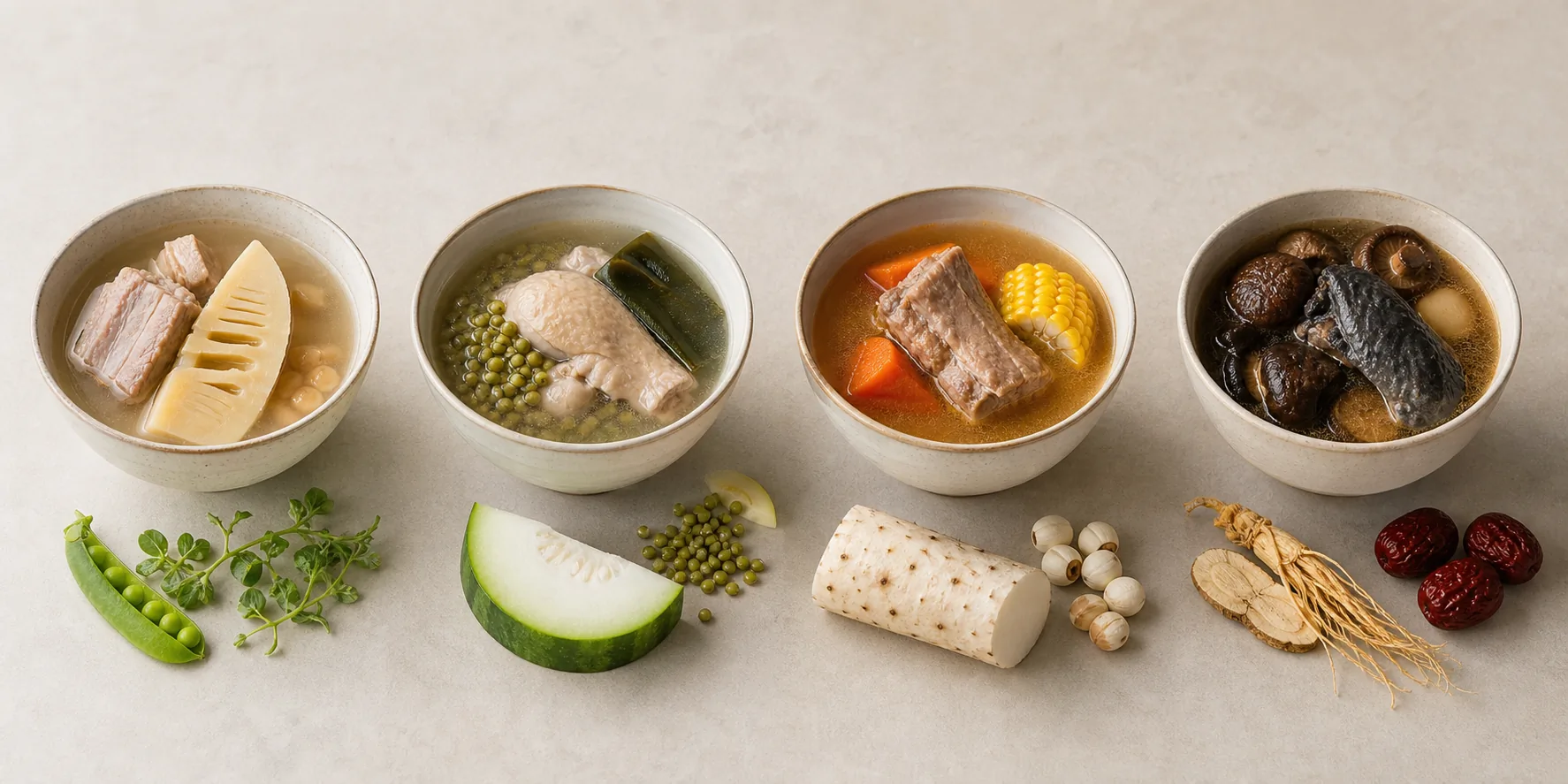
A useful way to understand Cantonese soup is to stop thinking of it as one fixed recipe category. In practice, it changes with the calendar. Spring soups often lean fresh and gentle. Summer soups are commonly lighter and more refreshing. Autumn brings ingredients associated with softness and moisture. Winter soups tend to feel fuller and warmer on the table.
This seasonal adjustment is one of the most important parts of the culture. Guangdong people do not value soup only because it tastes good. They value it because it helps food stay in conversation with weather, routine, and the body's changing needs across the year.
5. A bowl of soup is also a form of family care
For many people raised in Guangdong, soup is tied as much to memory as to cooking. Someone in the family starts the pot early. Someone remembers which ingredients were used last week. Someone leaves a bowl behind for the person coming home late. The question "What soup did we make today?" can sound ordinary, but inside it is a whole language of care.
That emotional layer helps explain why Cantonese soup has survived changes in schedule and lifestyle. Even when people switch from clay pots to electric slow cookers, the meaning stays recognizable. The method adapts, but the gesture remains.
6. Why this food tradition still matters today
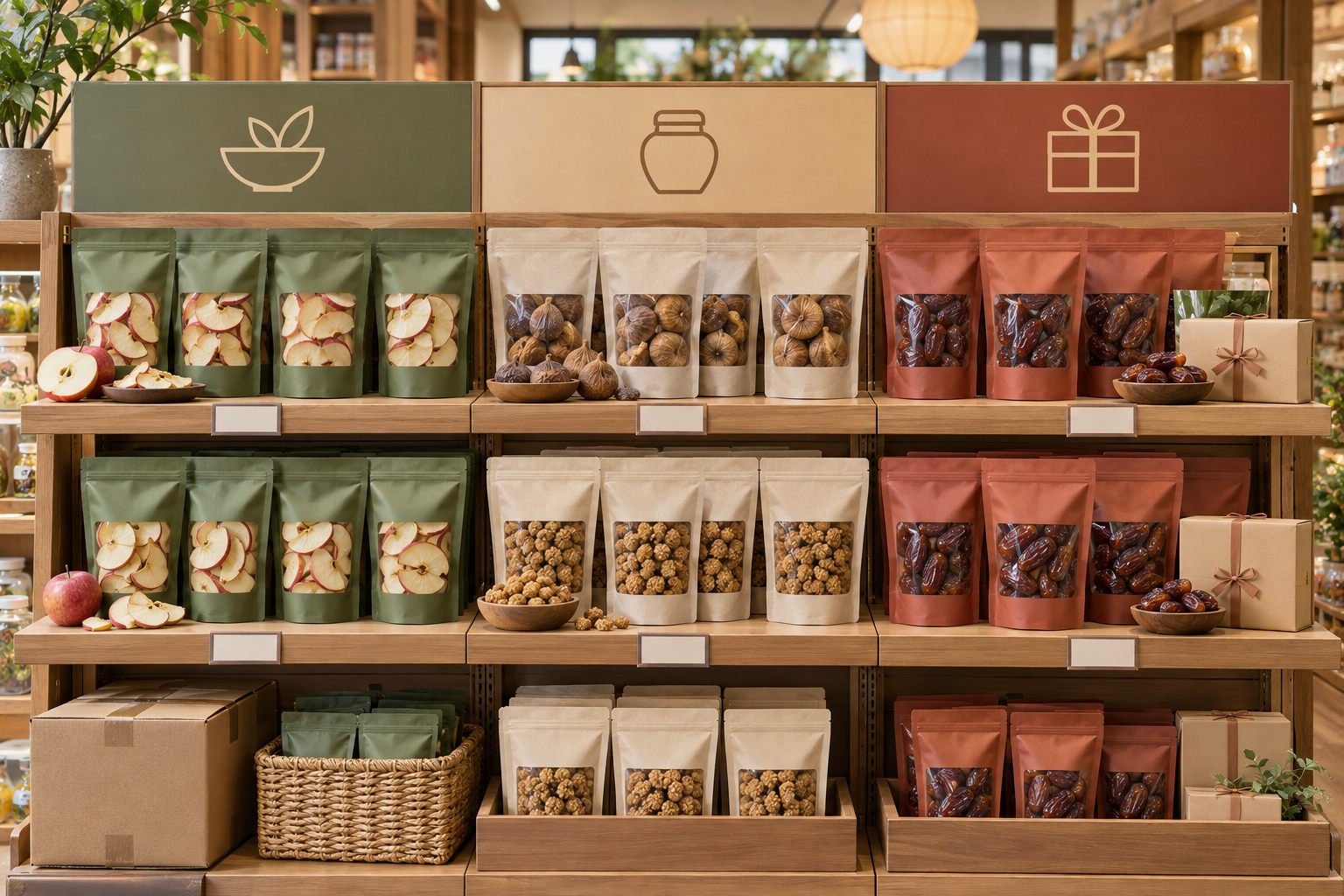
Modern Guangdong life moves quickly, yet soup has not disappeared. It has simply changed form. Restaurants, neighborhood soup shops, ready-made soup packs, and curated pantry products all extend the tradition in different ways. For buyers and retailers, this also explains why soup ingredients remain commercially meaningful. They are not abstract heritage items. They are still connected to repeat household use.
That is one reason the wider market for Cantonese dried goods remains so rich. Understanding soup culture makes it easier to understand why products such as dried figs, Dried Tangerine Peel, Sea Coconut, and blended soup kits continue to matter in stores and in export programs.
Conclusion
Guangdong soup culture is moving because it places daily life, seasonal awareness, and quiet care into one bowl. Old fire soup is the most famous symbol of that tradition, but the deeper story is larger: a regional habit of cooking with patience, matching food to climate, and using soup as one of the gentlest ways to look after family.
If you are building a Cantonese soup ingredient assortment, browse our product catalog or send an inquiry to discuss ingredient combinations, packaging, and first-order plans.
From soup culture to retail soup mixes
For buyers building a shelf around Cantonese soup, connect the cultural story to clear product fields: ingredient list, pouch weight, cooking method, label language, shelf life, carton plan, and MOQ. A practical first test can compare Five Finger Fig Cantonese Soup Mix, Ching Bo Leung Soup Mix, and Pear & Fig Cantonese Soup Mix.
Need samples or a wholesale plan? Browse the Cantonese soup mix catalog or send an inquiry.
 Related products