Saudi Arabia and the UAE are both important markets for dates and dried fruit, but they should not be treated as identical buying markets. For an importer, first-order performance depends on channel fit, pack format, inventory planning, and local partner readiness—not only on the supplier's unit price.
If you are considering Medjool Dates, Khalas Dates, Dried Fruit Gift Boxes, or other dried fruits for the Gulf, this guide provides a practical framework for choosing between the UAE and Saudi Arabia.
This is a sourcing-planning guide, not customs, tax, or regulatory advice. Confirm current labeling, import documentation, and product requirements with the destination importer, customs broker, and local compliance advisor before production.
1. Understand the different roles of the two markets
The UAE—particularly Dubai—is often used as a hub for premium retail, hotels, corporate gifting, regional distribution, and re-export. Buyers commonly place greater emphasis on presentation, response speed, and the ability to serve customers from multiple markets. For a buyer testing the GCC, the UAE can be a practical starting point for smaller trial orders and channel validation.
Saudi Arabia is better approached as a large local consumption and distribution market. Supermarkets, wholesalers, regional distributors, and family consumption require more attention to pack sizes, price points, replenishment, distributor economics, and supply consistency.
| Buying objective | Market to research first | First-order focus |
|---|---|---|
| Test premium gifting and hotel channels | UAE | Presentation, gifting use, lead time, and flexibility |
| Explore regional distribution or re-export | UAE | Outer cartons, documentation, destination mix, and routing |
| Build family and supermarket volume | Saudi Arabia | Pack sizes, price points, inventory turns, and distributor support |
| Establish a long-term local brand | Either or both | Labels, importer responsibility, consistent supply, and repeat data |
This does not mean the UAE is only premium or Saudi Arabia is only mass market. The right choice still depends on the buyer's channel, city, price positioning, and local partner.
2. Choose the assortment by channel
Instead of asking which SKU is “most popular in the Middle East,” first ask where the buyer will sell it. The same dates can require different formats for a hotel gift box, a specialty supermarket, or a wholesale market.
UAE: gifting, hotels, and premium retail
The UAE is a natural market to test presentation-led and mixed products:
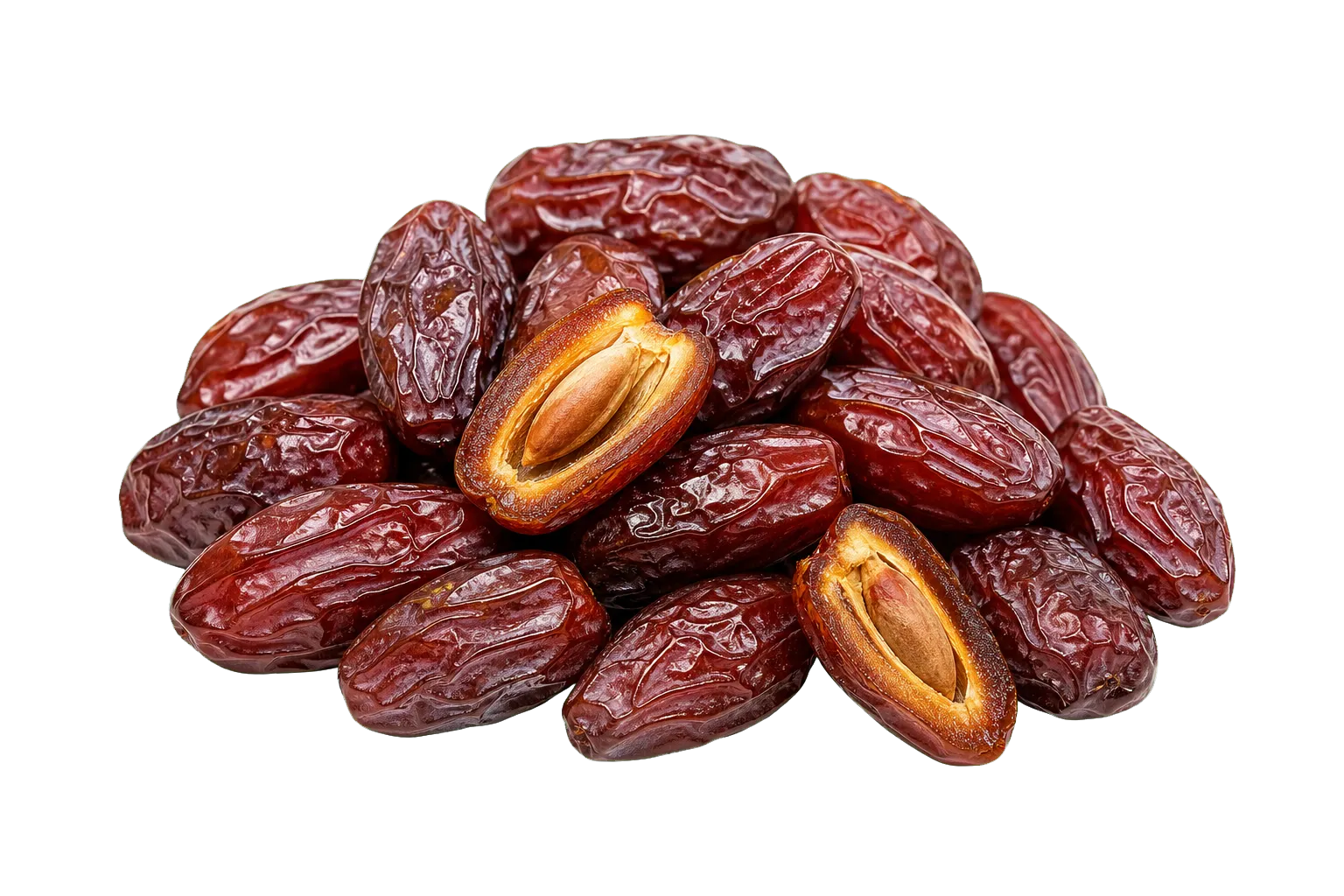
- Premium hero SKU: Medjool Dates for gift boxes, hotel hospitality, and premium retail.
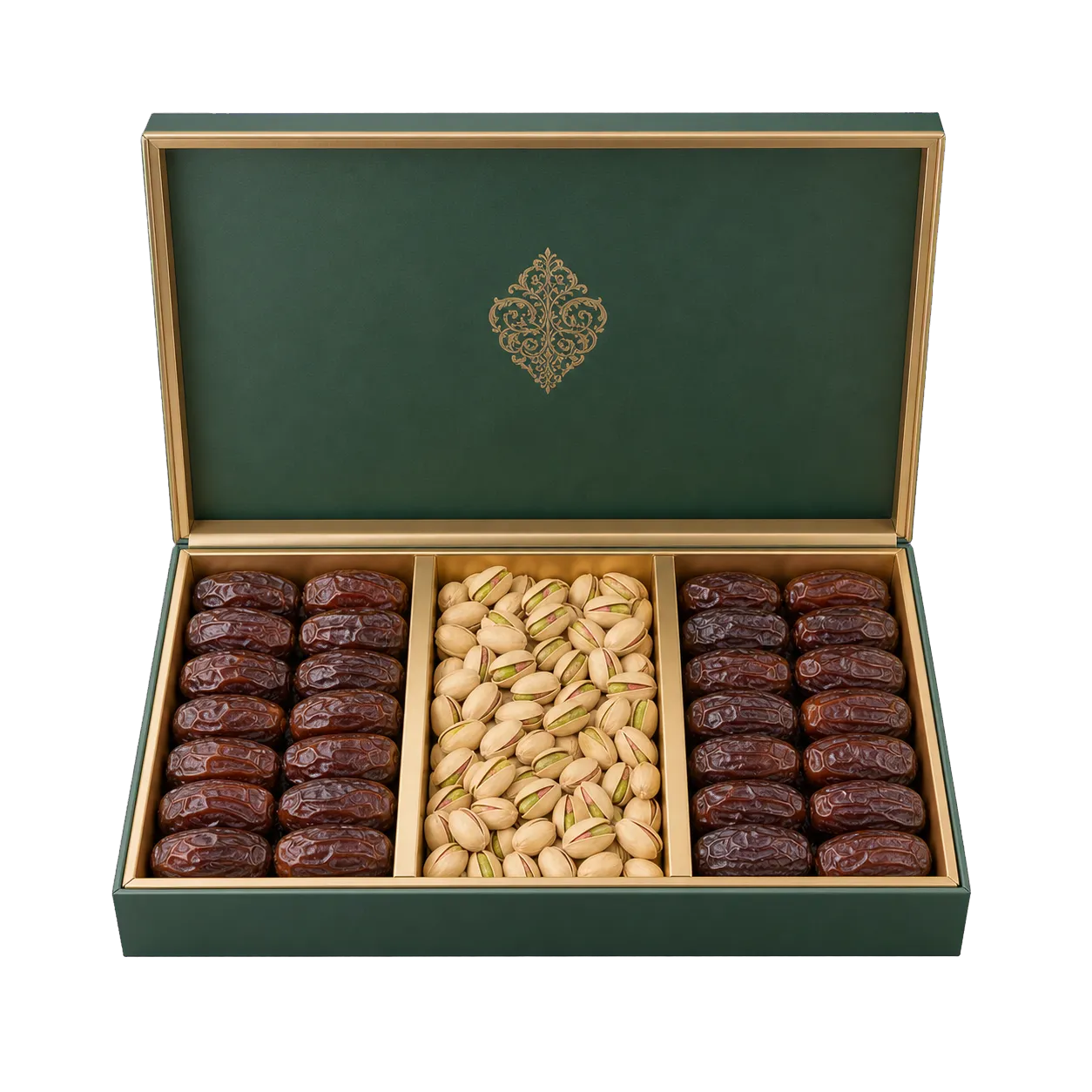
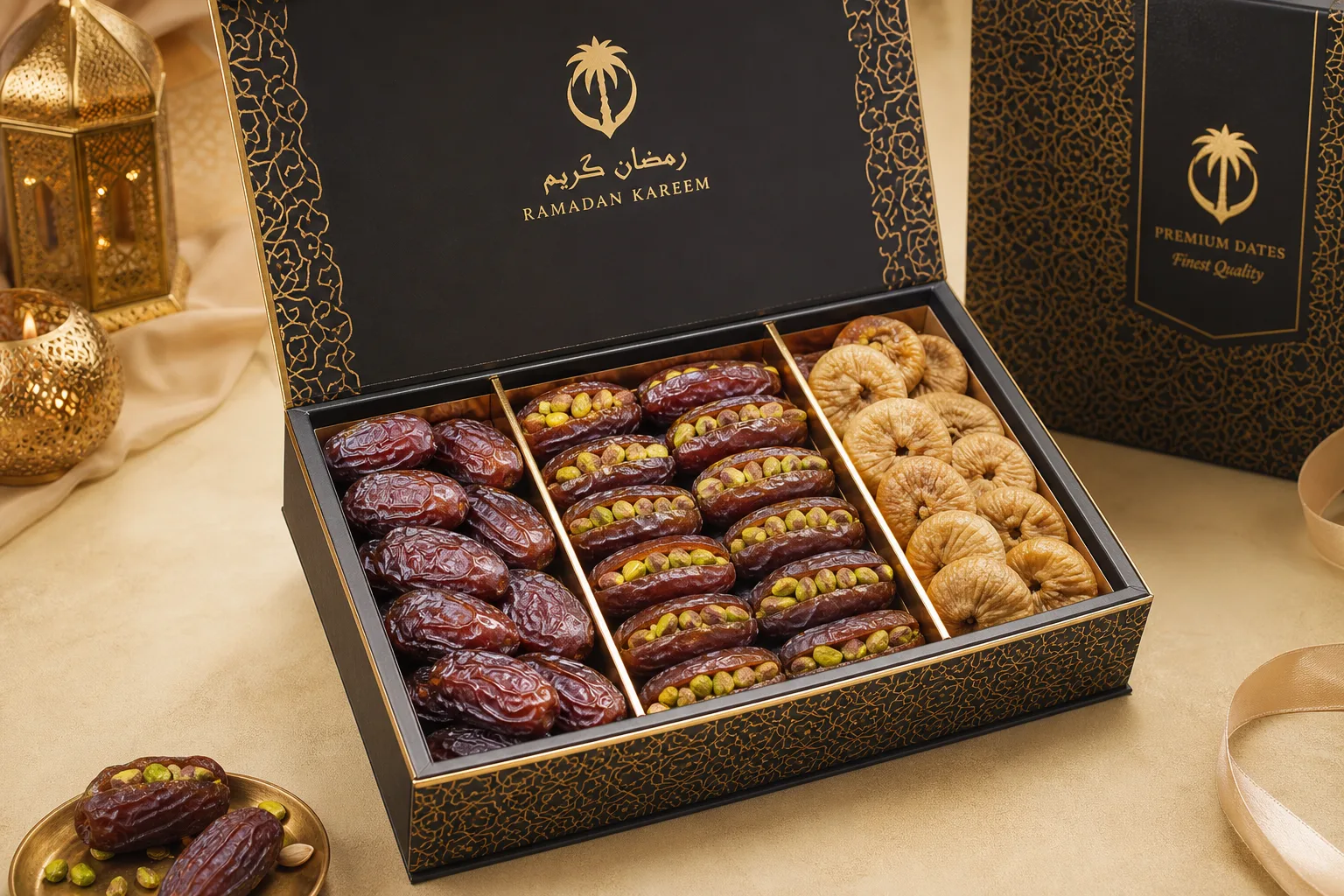
- Gift assortment: Dates & Pistachio Gift Box for corporate gifting, seasonal displays, and specialty stores.
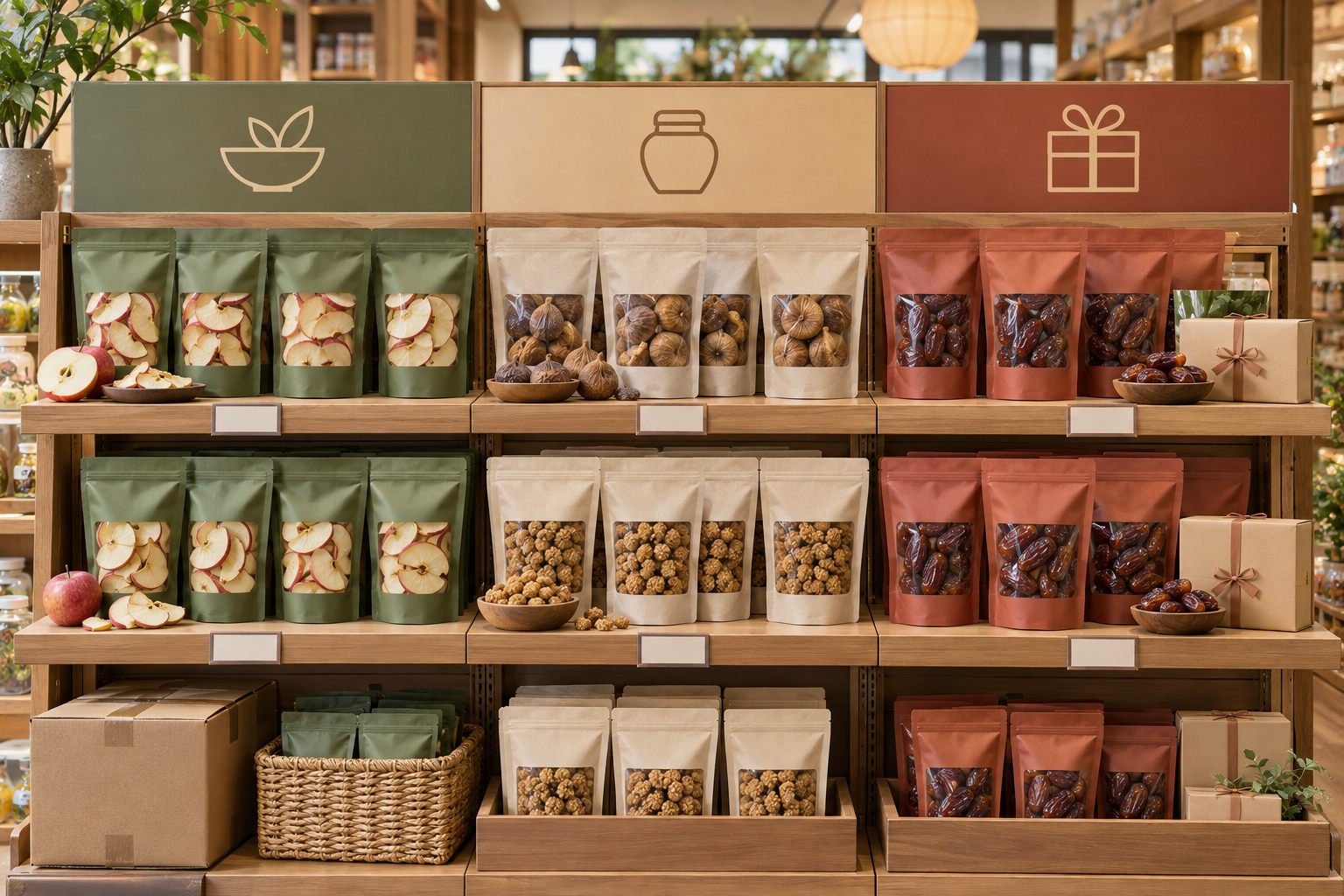
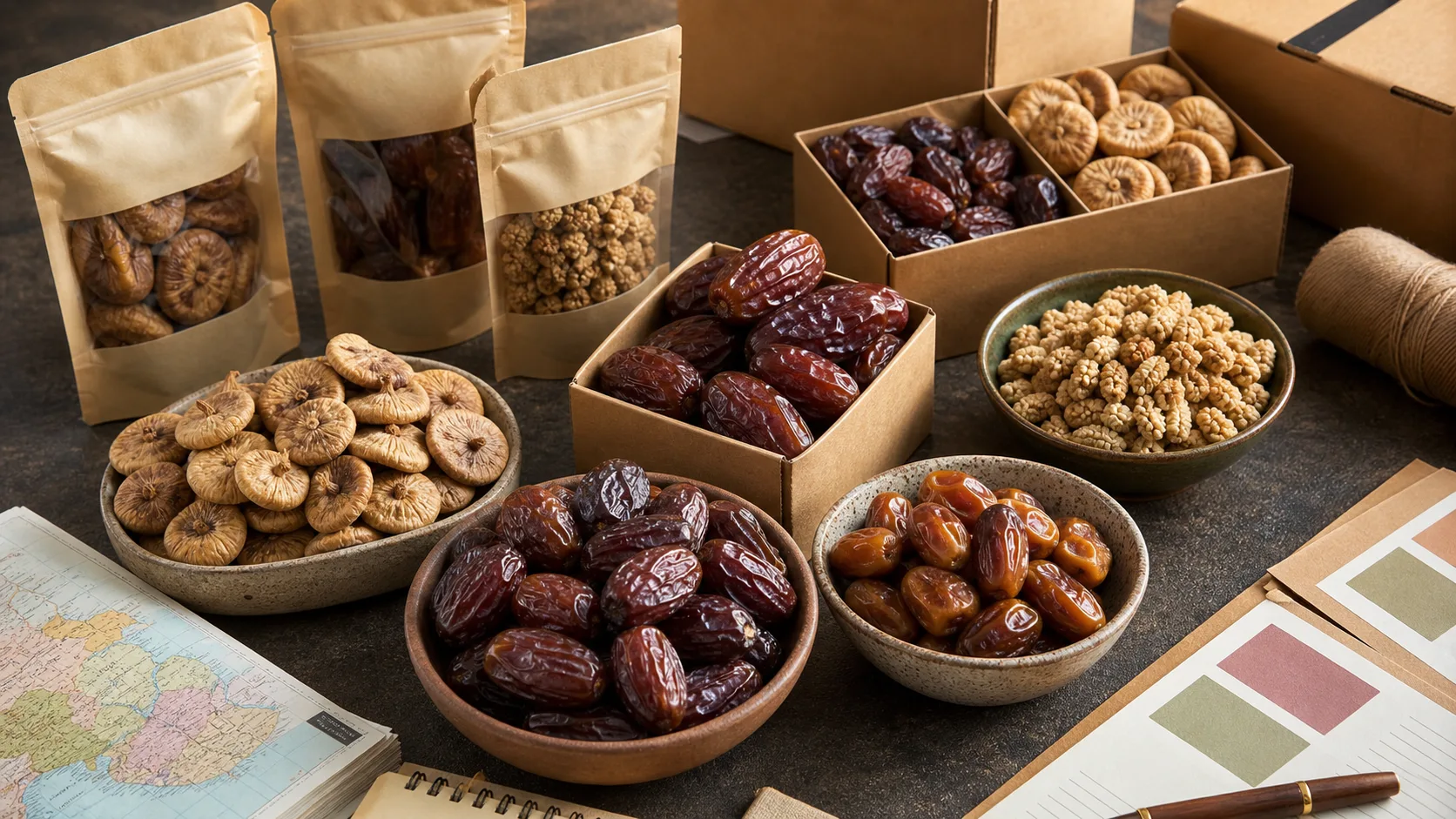
- Color and texture accents: Dried Figs and Dried Mulberries for mixed gift programs.
A UAE trial does not always need a fully custom rigid box. A standard premium box with a custom Arabic-English sleeve can be a lower-risk way to test price, presentation, and buyer response.
Saudi Arabia: family consumption, supermarkets, and distributors
For Saudi Arabia, consider a daily-consumption line alongside a seasonal gifting line:
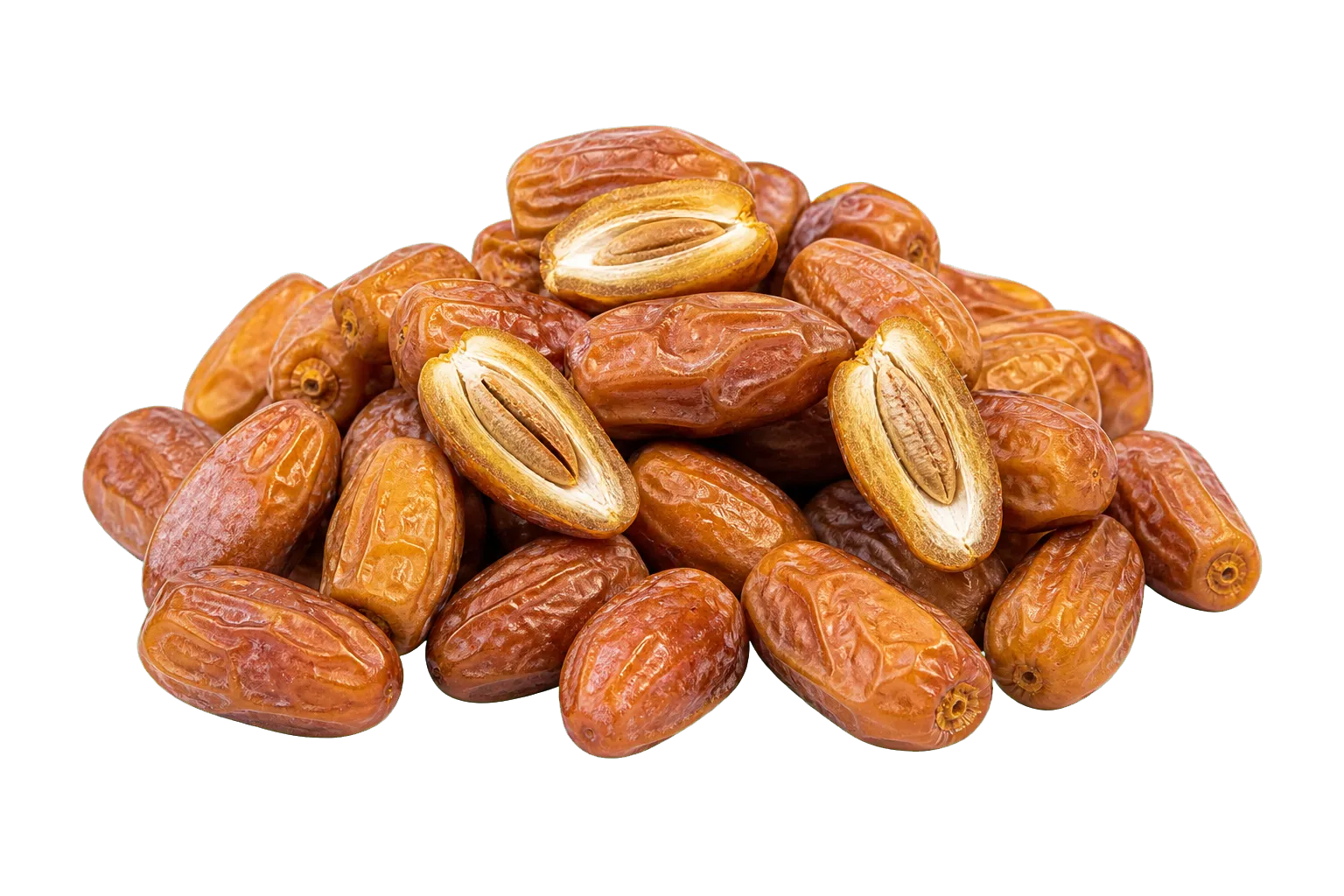
- Everyday line: Khalas Dates or Dried Dates, potentially in family sizes with efficient carton loading.
- Mid-range mixed line: Dates paired with figs, mulberries, or other dried fruits in an easy-to-understand assortment.
- Seasonal and corporate gifting: A more complete gift box, with separate calculations for inserts, outer cartons, and moisture protection.
When entering Saudi Arabia through a distributor, the quotation must leave room for the importer, distributor, and retail channel. Work backward from the target shelf price before accepting a product quotation.
3. Do not choose pack size by weight alone
Pack sizes such as 250g, 500g, and 800g/1kg can be useful planning points, but the right format depends on the channel and sales model:
| Pack direction | Suitable use | Confirm before ordering |
|---|---|---|
| 150–250g | Trial, specialty retail, small households | Unit packaging cost, shelf price, and barcode |
| 400–500g | Family consumption, regular gifting, supermarkets | Carton pack, shelf life, and replenishment rate |
| 800g–1kg | Wholesale, larger households, and sharing occasions | Carton strength, carrying features, inserts, and shipping volume |
A premium gift box does not automatically become more attractive by adding weight. Unit count, visual layering, opening experience, and transport loss often influence the selling price more than net weight. For a first test, let one SKU provide a price entry point and another provide premium presentation rather than giving every item expensive packaging.
4. Use a four-stage packaging path
Stage 1: Bulk bags or outer cartons
Suitable for importers, food-service buyers, and local repacking. This keeps cost and lead time relatively simple, but it is not designed for premium shelf presentation.
Stage 2: Stock packaging with custom labels
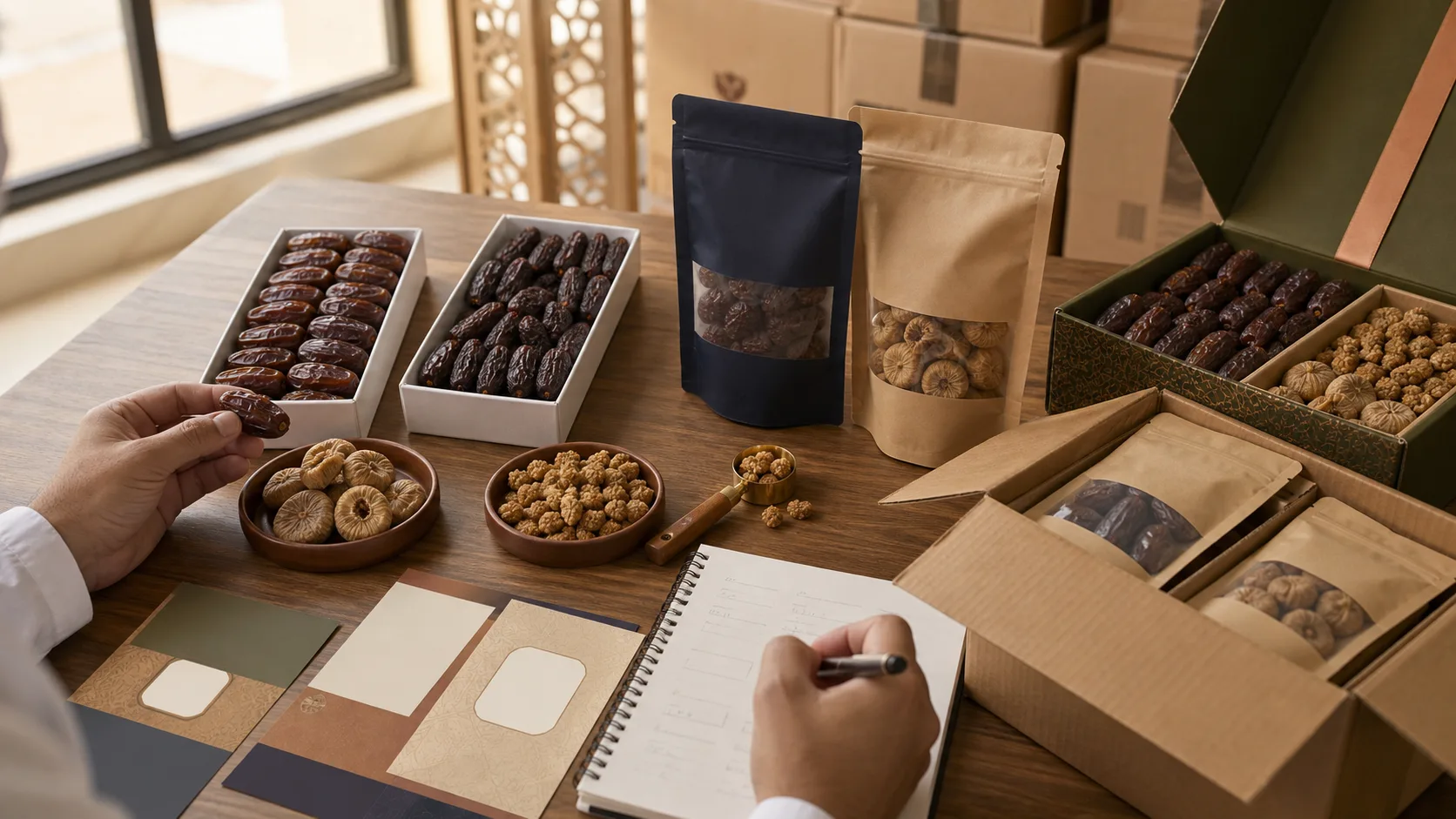
Suitable for market testing. The buyer can validate the product, format, and channel before investing in printed pouches. Reserve space for Arabic, English, barcode, and importer information.
Stage 3: Custom printed pouches
Suitable for a confirmed retail project. Confirm color consistency, material, barrier performance, proofing, MOQ, and setup lead time before approving production.
Stage 4: Seasonal or corporate gift boxes
Suitable for Ramadan, Eid, weddings, hotels, and corporate gifting. In addition to the food itself, calculate insert retention, individual pouches, carton moisture protection, pallet wrapping, and humidity changes during ocean freight.
5. Confirm labels and import documents before proofing
Retail products entering Saudi Arabia or the UAE should be planned with Arabic and English information. Confirm at least:
- product name and product type
- ingredient list and ingredient order
- net content and pack format
- country of origin and producer information
- storage conditions
- production date, shelf-life, or expiry-date format
- nut and other allergen declarations
- barcode, batch, and importer details
- destination-specific documents or testing requirements
For boxes containing pistachios, cashews, almonds, or other nuts, allergen information should not be decided after printing. Also confirm whether the product is a single ingredient, a blended product, or a locally assembled gift box, because that can affect label content and responsibility.
Arabic text on a package does not by itself prove compliance. The final artwork should be reviewed by the destination importer and an appropriate local advisor, and the supplier should receive written approval before production.
6. Test with three SKUs instead of launching everything at once
A first Gulf-market assortment can use three roles:
- One everyday date SKU: such as Khalas Dates or Dried Dates to test routine consumption and price acceptance.
- One premium date SKU: such as Medjool Dates to test specialty retail, hotels, and gifting.
- One presentation SKU: such as a Dates & Pistachio Gift Box or mixed dried fruit gift box for seasonal and higher-value occasions.
Compare 250g and 500g formats before developing too many flavors or packaging versions. Track inquiry conversion, sales velocity, sticking or damage during transit, customer feedback, and reorder interest before increasing carton quantities or upgrading packaging.
7. What to include in a supplier inquiry
To receive a useful quotation, provide:
- Target country: Saudi Arabia, UAE, or another GCC market
- Sales channel: supermarket, distributor, hotel, gift store, or e-commerce
- Product list and target pack size for each SKU
- Estimated first-order quantity and whether mixed cartons are acceptable
- Stock packaging, custom label, or fully custom packaging preference
- Destination city or port
- Arabic-English labeling requirement
- Target launch date, especially if tied to Ramadan or another season
- Sample, proofing, and documentation needs
The supplier should state the product price basis, packaging charge, units per carton, carton dimensions, MOQ, production lead time, Incoterm, and whether freight includes destination charges. Separating these items makes it easier to compare the real landed cost of each route.
Conclusion
The UAE and Saudi Arabia are not simply two answers to the question “which market is better?” They represent different entry paths. The UAE is often suited to premium gifting, hotels, and regional distribution tests, while Saudi Arabia is better planned around family consumption, supermarkets, and long-term distribution.
The lower-risk approach is to choose the channel first, then select SKUs and pack sizes; validate with stock packaging or bilingual labels before investing in fully custom gift boxes; and confirm labels, documents, MOQ, and shipping plans before production.
Browse our dried fruit catalog or submit a wholesale inquiry with your target country, channel, packaging preference, and expected order quantity. We can help confirm dates, dried fruits, gift boxes, MOQ, and a practical first-order plan.
 Related products