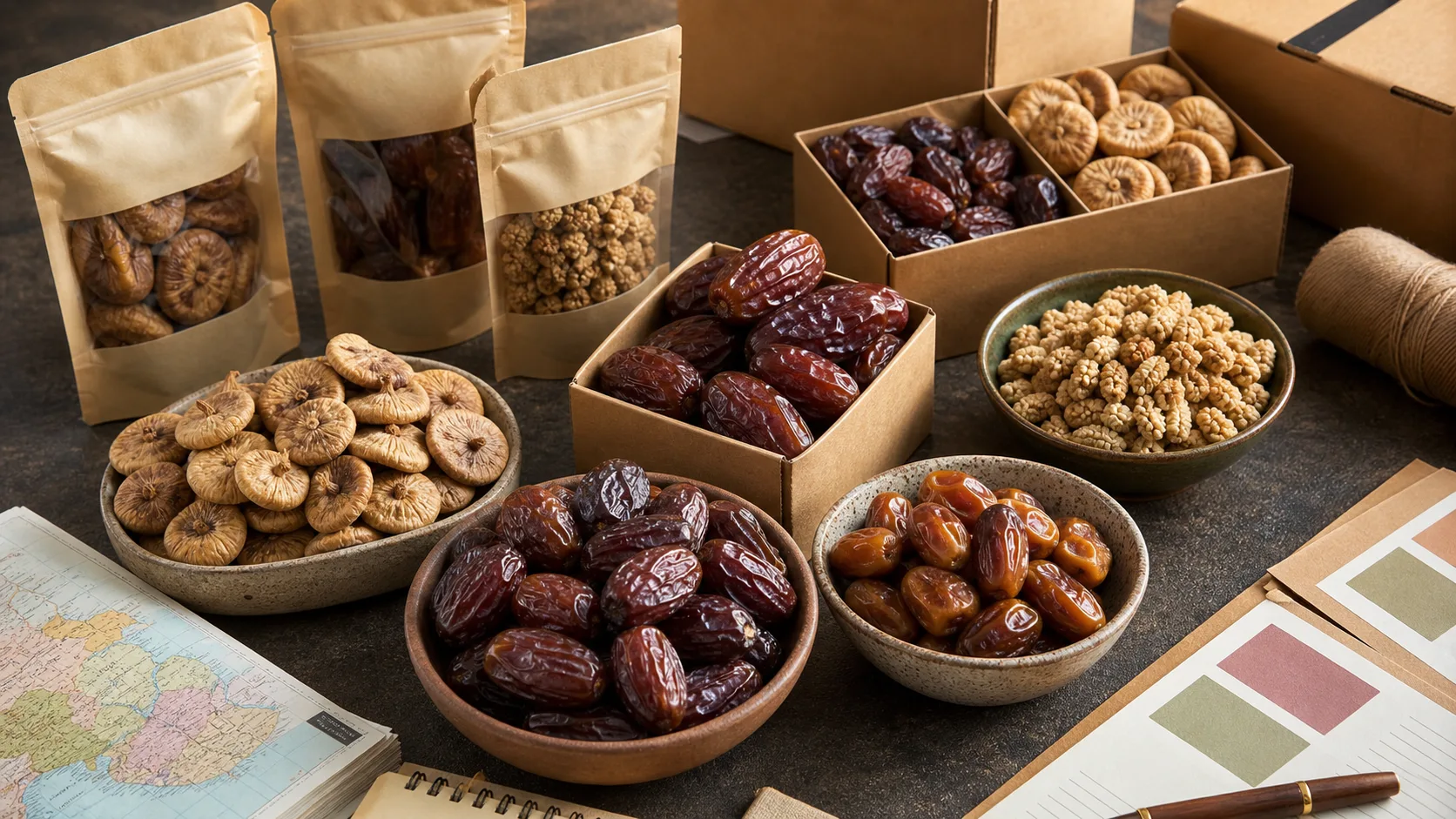
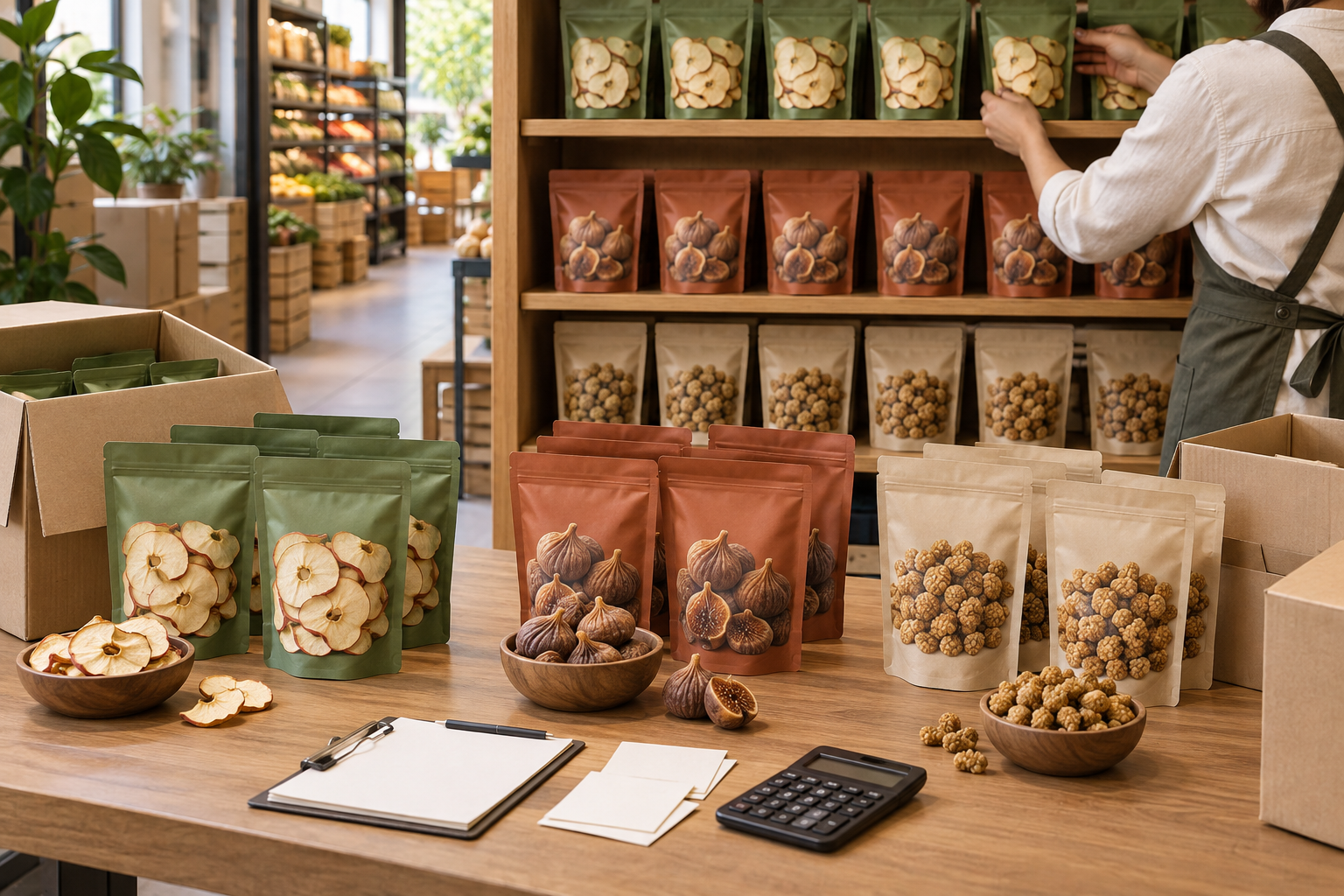
A dried fruit assortment is not finished when the cartons arrive at a U.S. Asian grocery store. The shelf position, product grouping, pack-size ladder, and replenishment routine determine whether shoppers understand the range and whether the buyer knows what to reorder.
This guide is for Asian grocery buyers, independent specialty retailers, distributors, and private-label teams. It focuses on practical merchandising and inventory decisions for dried apple slices, dried figs, dried mulberries, dates, and related gift formats. It is not customs, tax, or legal advice; confirm destination-market requirements with the responsible importer and compliance team.
1. Divide the shelf by shopper mission
Start with the reason a shopper is standing in front of the shelf. A simple three-zone structure is easier to shop than a random row of unrelated pouches.
| Shelf zone | Product role | Merchandising question |
|---|---|---|
| Snack and lunchbox | Easy-entry fruit, smaller pouches, resealable formats | Can a new shopper understand the product in a few seconds? |
| Pantry and family use | Larger bags, familiar dried fruit, repeat-use items | Is the pack size practical for regular household use? |
| Gift and specialty | Premium fruit, mixed boxes, seasonal presentation | Does the display look intentional and giftable? |
The zones do not need to be in separate aisles. They can be three visual blocks within one bay, provided the product names, weights, and prices are easy to compare.
2. Assign each product a shelf job
The first range should not ask every SKU to do the same thing. Give each product a clear role:
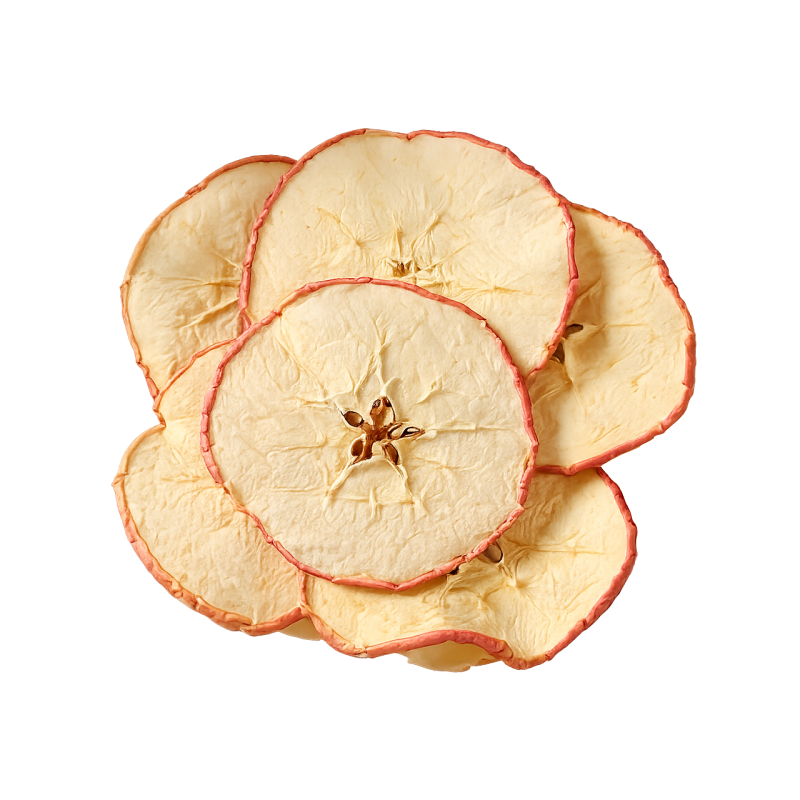
- Dried apple slices: a simple snack entry point with a visible, easy-to-photograph shape. Use smaller pouches near snack and lunchbox products.
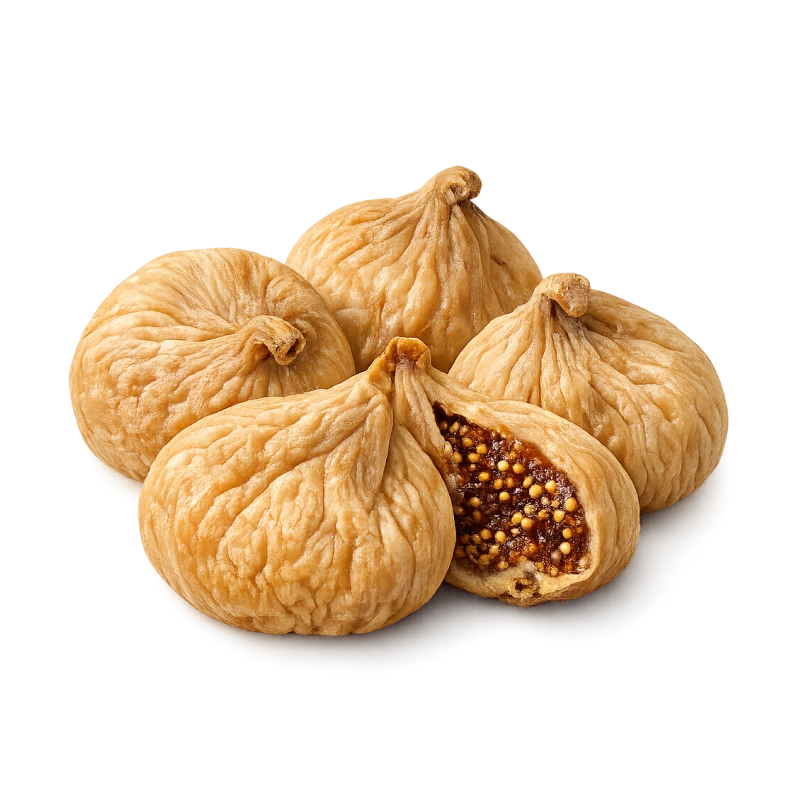
- Dried figs: a familiar dried-fruit anchor for pantry shoppers, mixed fruit displays, and customers looking for a distinct texture.
- Dried mulberries: a specialty and visual accent that can sit beside premium dried fruit or a mixed-fruit story.
- Dried dates: a familiar everyday option that can support a larger family pack or a date-focused section.
- Dried fruit gift box: a higher-value display item for seasonal, corporate, or specialty retail occasions.
This role-based approach also helps the buyer decide what to change. If the shelf needs an easier entry product, adjust the apple slice pack or placement rather than adding five more SKUs.
3. Build a readable pack-size ladder
Shoppers should see a clear reason to choose a smaller or larger package. Use pack size to create a ladder, not confusion.
| Pack direction | Shelf role | Operational note |
|---|---|---|
| 150g–250g | Trial, snack, and specialty entry | Useful for testing price and product understanding |
| 400g–500g | Family use and regular pantry purchase | Needs enough facings and a reliable replenishment rhythm |
| 800g–1kg or bulk carton | Larger households, food service, or repacking | Keep separate from small retail pouches and explain the use clearly |
The same SKU does not need every size on the first shipment. Start with the size that fits the channel, then add a larger or smaller version after sales data shows a need.
4. Use adjacent displays without overcomplicating the story
Cross-selling works best when the relationship is obvious. Keep related items close enough to compare, but do not turn one shelf into an unstructured catalogue.
Useful groupings include:
- apple slices beside other snack-oriented dried fruit
- figs and dates in a familiar pantry or dried-fruit section
- mulberries beside premium or specialty fruit
- a gift box at the end of the range or on a seasonal display
- a small recipe or usage card only when the product needs more explanation
For each grouping, use one clear message: snack, pantry, specialty, or gift. Avoid making unverified health promises. Product naming, ingredients, net weight, storage, and practical use are safer foundations for shelf communication.
5. Plan facings and back-stock before the first order
The shelf plan should match the carton plan. Before ordering, record the number of facings, units per facing, units per carton, carton dimensions, and where reserve stock will be kept.
A practical first-order worksheet should include:
- planned facings for each SKU
- opening units on the shelf
- reserve units in the back room
- cartons required to refill the shelf
- expected weekly unit sales
- lead time for the next shipment
- a buffer for slower freight or seasonal demand
Do not treat the display shelf as the entire inventory. A product can look sold out even when cartons are in the back room, or appear well stocked while the next shipment is already late.
6. Set a simple reorder point
The buyer does not need a complicated system to begin. A basic reorder point can connect weekly sales to supplier lead time:
Reorder point = average weekly unit sales × replenishment weeks + safety stock
For example, if a pouch sells 12 units per week, the replenishment cycle is 4 weeks, and the buyer wants 20 units of safety stock, the planning point is 68 units. This is an operating example, not a universal target; adjust it for seasonality, cash limits, shelf space, and actual supplier performance.
Track the point separately for each SKU. A fast-selling apple slice pouch, a slower premium mulberry pouch, and a seasonal gift box should not share the same reorder rule.
7. Review the shelf after two to four weeks
The first review should look beyond total sales. Ask whether shoppers can find the product, understand the difference between sizes, and see enough stock to trust the range.
Record:
- Units sold by SKU and pack size.
- Sales by shelf zone or store location.
- Products that receive questions but few purchases.
- Out-of-stock events and how long they lasted.
- Damaged, crushed, or leaking packages.
- Customer requests for different weights or combinations.
- Gross margin after packaging, freight, and destination costs.
If a product is noticed but not purchased, test the name, image, position, pack size, or price before removing it. If a product sells quickly, confirm that the supplier can repeat the same specification and packaging before expanding the range.
8. Plan the second order from evidence
The second order should not simply repeat the first order. Use the review to choose one of four actions for each SKU:
- keep the same product and pack size
- keep the product but change the pack size or shelf position
- reduce the quantity and keep it as a specialty item
- pause the SKU and test a different product or format
Ask the supplier for a second-order quote that separates product, packaging, cartons, mixed-SKU rules, lead time, and shipping basis. If one SKU is growing faster than the others, ask whether it can ship in a mixed carton or on a separate replenishment schedule.
9. Keep the supplier brief aligned with the shelf
Share the actual retail plan with the supplier. Include the target channel, store or distribution area, product roles, pack sizes, number of units per carton, expected monthly volume, destination, label language, and whether the next order may be mixed.
The more specific the brief, the easier it is to compare a standard pouch, resealable bag, private-label package, or bulk carton. Keep the approved sample, label file, carton plan, and arrival photos so the next shipment can be checked against the original reference.
Frequently asked questions
Should all dried fruit SKUs be displayed together?
They can share one category, but the shelf is easier to shop when products are grouped by shopper mission: snack, pantry, specialty, and gift. The best arrangement depends on the store layout and customer behavior.
How many facings should a new SKU receive?
Start with enough stock to look intentional without overcommitting shelf space. Use opening units, expected weekly sales, carton quantity, and replenishment lead time to set the first plan, then revise it after two to four weeks.
Should a store start with small or family-size pouches?
Use small pouches when the goal is product discovery or price testing. Use family sizes when repeat use and storage space are already proven. A two-size test can work when the store has enough traffic and back-stock control.
When should a retailer place the second order?
Use the reorder point rather than waiting for the shelf to be empty. Consider weekly sales, supplier lead time, safety stock, seasonal demand, and whether the next shipment can be mixed.
Can the shelf use private-label packaging?
Yes, when the product role, pack size, artwork, barcode, packaging MOQ, and reorder signal are clear. A standard pouch with a controlled label may be a lower-risk first step for an unproven shelf.
How can I request a merchandising assortment or sample?
Browse the dried fruit catalog or send a wholesale inquiry with your store type, destination, shelf roles, pack sizes, and estimated monthly volume.
Conclusion
Good dried fruit merchandising connects three decisions: what the shopper sees, what the store can replenish, and what the supplier can repeat. Organize the shelf by mission, give each SKU a job, create a readable pack-size ladder, set a reorder point, and use the first two to four weeks of sales data to plan the next order.
For a U.S. Asian grocery assortment, start with a focused range and a clear shelf brief rather than a crowded display. Browse the dried fruit catalog or send a wholesale inquiry to discuss samples, packaging, cartons, MOQ, and replenishment planning.
 Related products