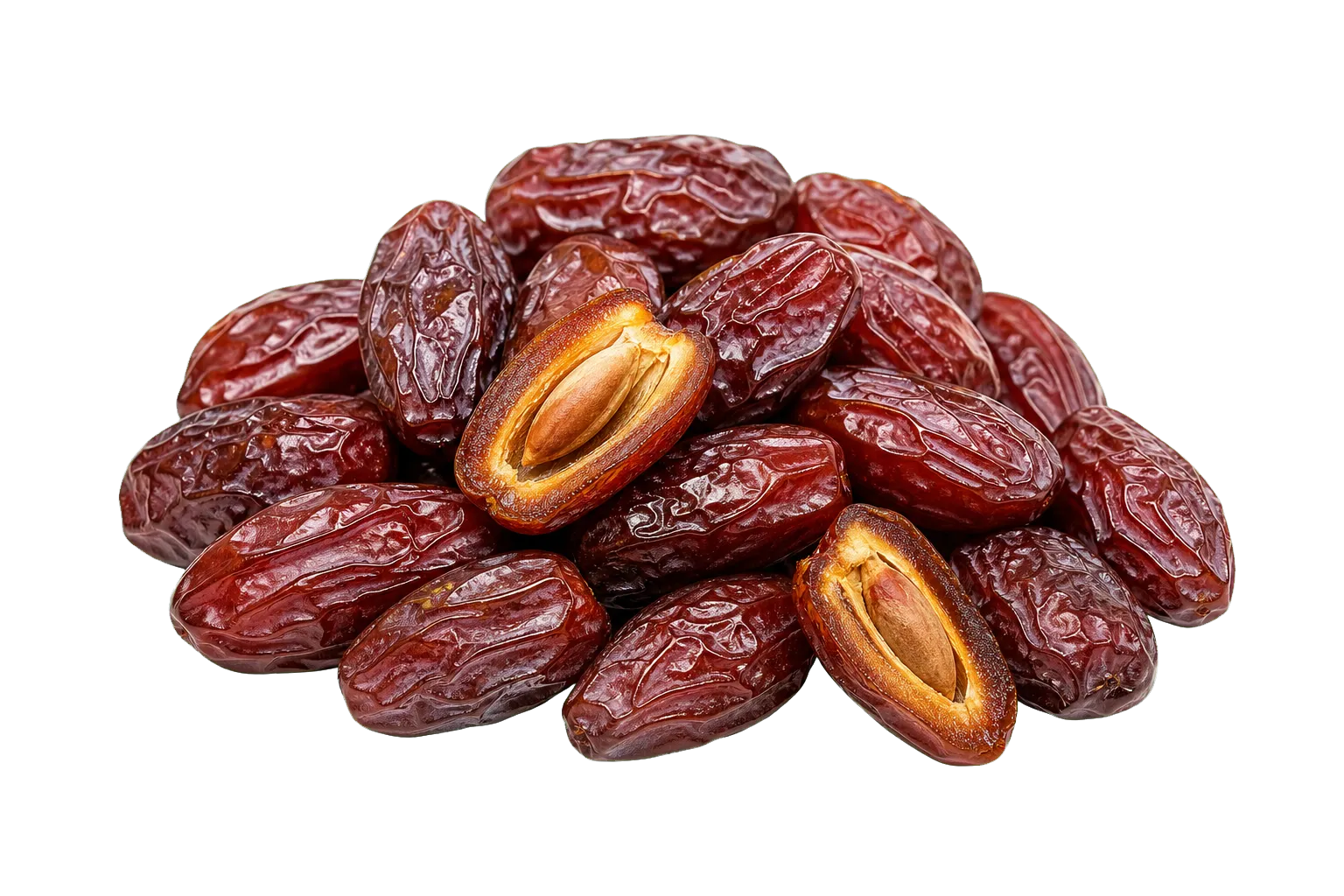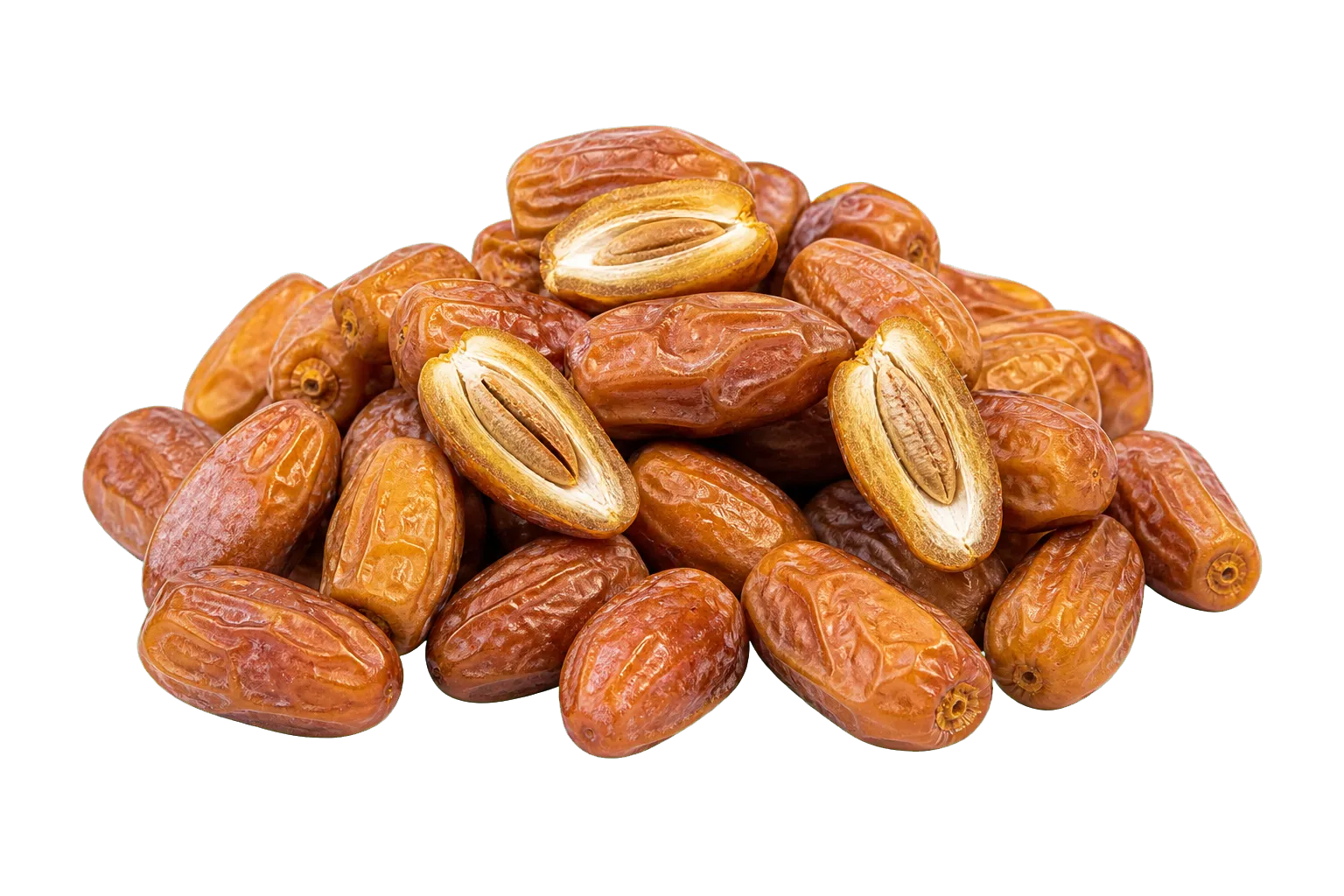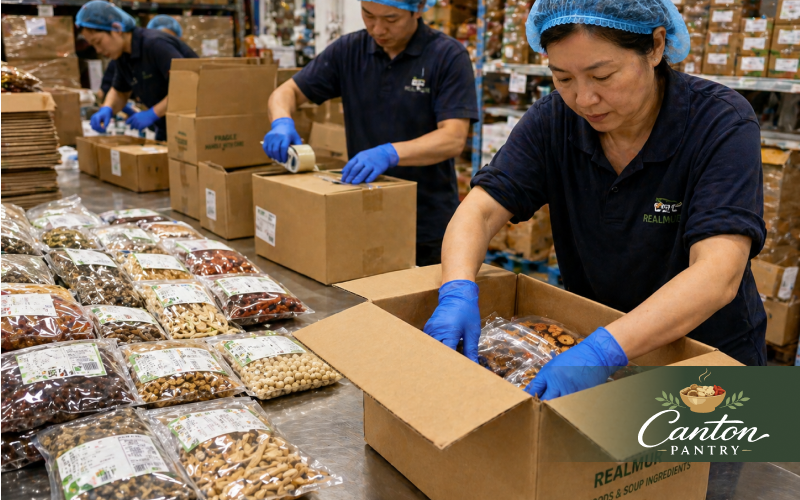

For UAE importers, the risk in a first dried fruit order is often not finding the product. It is failing to align the artwork, product data, and import process before production. Medjool dates, Khalas dates, dried figs, dried mulberries, and nut-filled gift boxes all need more than a front-panel design review: the label data, dates, storage instructions, outer carton, and importer information should be checked together.
This article is a purchasing framework, not legal advice and not a substitute for review by the UAE importer, the relevant local authority, or a compliance adviser. Requirements can vary by emirate, product type, packaging, and sales channel. Use the importer-approved version for production and shipment.
1. Confirm how the product will be sold
The same dried fruit may require a different data and packaging plan when it is shipped as a bulk carton, a retail pouch, a gift box, or a mixed assortment. Before requesting a quote, write down:
- single ingredient or mixed product
- supermarket, specialty grocery, hotel, gifting, or food-service channel
- 250g, 500g, 1kg, or another net weight
- stock packaging, applied label, or fully custom printed packaging
- direct retail sale after import or local repacking and assortment building
This decision affects the ingredient statement, nutrition panel, barcode, outer-carton information, inner-pouch count, and who reviews the final artwork. Do not wait until the box is packed to decide whether the item is a retail SKU or a gift program.
2. Design Arabic and English labels together
Food packaging intended for sale in the UAE should make the product information clear to both the buyer and the consumer. The final layout should be reviewed by the local importer for the target emirate and channel. Suppliers should not remove or rewrite Arabic copy based only on a general translation.
Keep Arabic and English in the same artwork file and map the fields line by line. Do not plan to print English first and add an Arabic sticker at the port unless the importer has approved that method. At minimum, review these fields together:
| Label field | What to confirm before ordering |
|---|---|
| Product name | It describes the true nature of the product, not only a marketing name |
| Ingredients | The order and wording match the single fruit or mixed gift box |
| Net weight | Weight, unit, and Arabic presentation are consistent |
| Nutrition information | Whether a nutrition panel is needed, and its data source and layout |
| Country of origin | The responsible production or packing entity and origin wording |
| Date information | Production, expiry, or best-before format and printing method |
| Storage conditions | Temperature, light, humidity, and after-opening guidance fit the product |
| Importer details | Local responsible party name, address, and other requested information |
| Batch and barcode | Batch location, retail barcode, and outer-carton traceability |
The exact fields can vary by product, package, and local approval path. Treat this table as a supplier brief, not as a complete regulatory checklist.
3. Set ingredients, nuts, and allergen wording early
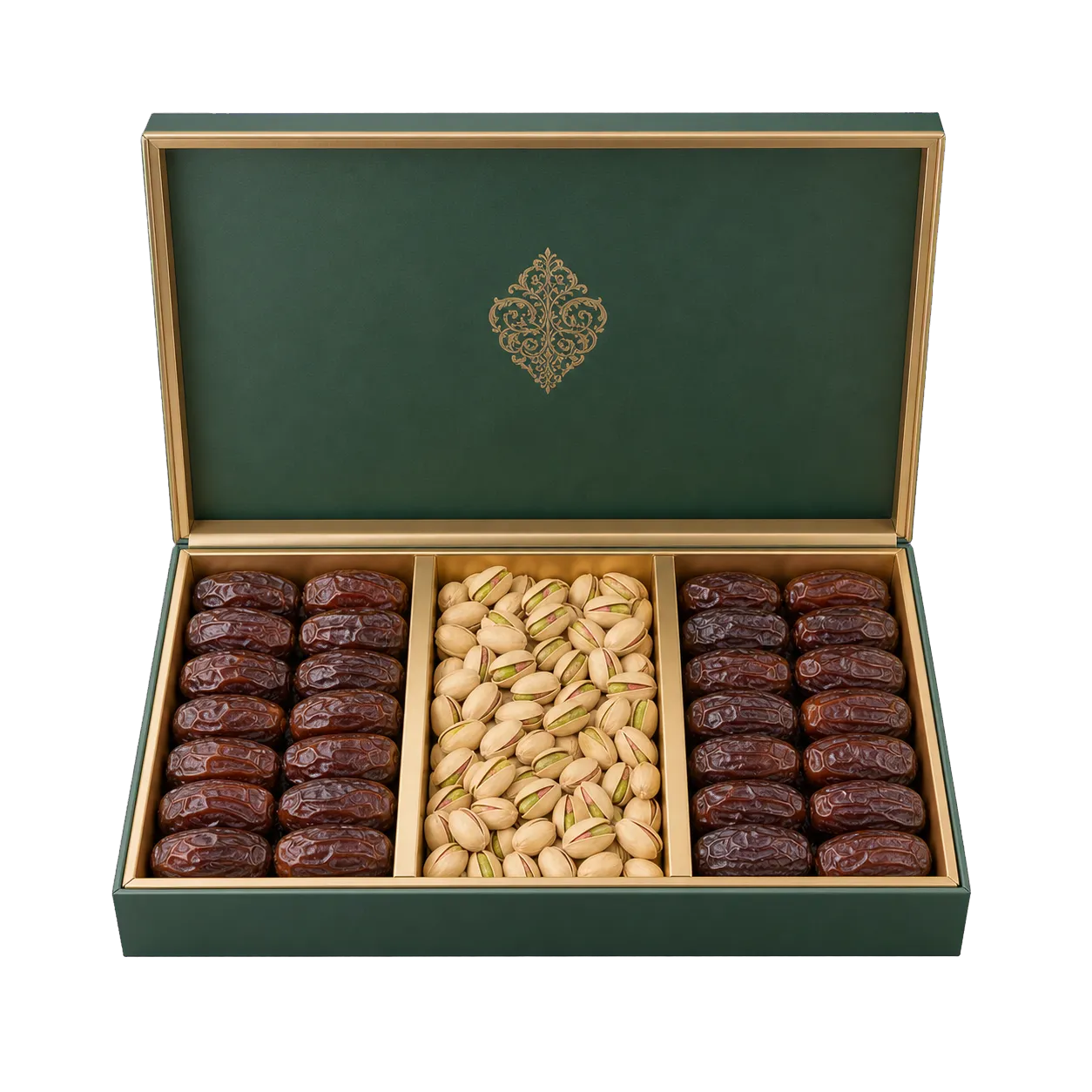
A single-ingredient Medjool Dates or Khalas Dates pack does not have the same label logic as a gift box containing pistachios, cashews, or almonds. For a Dates & Pistachio Gift Box, confirm early:
- the exact name and net weight of each inner pack
- nut types, pitting status, and any additional ingredients
- whether shared-line or cross-contact information needs review
- how the outer gift box and each inner pouch divide label information
- the allergen wording approved by the importer
Do not remove ingredient or allergen information to make the front panel look cleaner. Also avoid adding claims such as “natural,” “no additives,” or “healthy” without importer and compliance review. Nutrition and health-related claims need evidence and market-specific approval.
4. Match dates and storage instructions to the actual pack
A dried fruit label is not complete simply because it contains a date. Before production, confirm who prints the date, whether it appears on the inner pouch or outer box, whether it is fixed print or batch coding, and whether it will remain legible after transit and storage.
For a UAE project, check the following during sample approval:
- The date format is accepted by the importer.
- Date fields on the pouch, box, and carton will not be hidden by seals or folds.
- Storage instructions match moisture level, barrier packaging, and transport conditions.
- After-opening guidance is useful to a retail consumer, not only to a warehouse.
- The outer carton carries the batch and case information needed for receiving and traceability.
If a gift box contains multiple inner pouches, confirm the batch relationship between the inner packs, the outer box, and the shipping carton.
5. Review retail and outer-carton labels separately
The retail label helps consumers identify and use the product. The outer-carton label supports warehousing, transport, and traceability. They may share data, but one artwork file should not simply be copied onto every package.
For retail packaging, focus on product name, net weight, ingredients, storage, dates, and barcode. For outer cartons, confirm SKU, inner count, net and gross weight, case number, batch, dimensions, stacking direction, and destination details. The importer, freight partner, and supplier should agree on the exact list for the chosen transport mode.
For a first order, ask the supplier for three proof sets: the retail front and back, one inner pouch or tray, and the shipping carton. Approve all three before printing or volume packing.
6. Let the local importer confirm registration and documents
The UAE government platform explains that imported food, food made locally, and food whose label, ingredients, or composition changes may need registration in the relevant food registration system before being handled in the market. The exact path, responsible party, and documents for Dubai or Abu Dhabi should be confirmed by the local importer for the intended sales location.
Use these official pages to build questions for the importer or compliance adviser:
- UAE official food accreditation and registration system
- ADAFSA General Food Labelling Requirements PDF
- Dubai Municipality resources for food traders and establishments
These references help structure a pre-order discussion; they do not mean that a particular SKU is approved. Product registration, label assessment, import permissions, and clearance documents should be confirmed by the responsible party before shipment.
7. Validate the first order with stock packaging and bilingual labels
If the retail price and channel are not proven, avoid investing in a complete premium rigid-box program immediately. A lower-risk sequence is:
- use standard food-grade pouches or boxes to confirm the product grade and size
- apply importer-approved Arabic-English labels or sleeves
- test one everyday date, one premium date, and one nut-containing gift box
- collect feedback on barcode scanning, shelf display, repeat orders, and packaging damage
- upgrade to printed pouches, custom box structures, and more weights after the first test
This separates product quality, label, and packaging-investment decisions. It also makes it easier to compare 250g, 500g, and 1kg channel formats.
8. Final information to send the supplier
Before ordering, send one consolidated brief containing:
- target emirate, city, and sales channel
- product SKU, grade, net weight, and units per carton
- final Arabic-English artwork and text-direction requirements
- ingredient, nut, and allergen confirmation
- production date, expiry, batch, and storage format
- retail pouch, inner pack, gift box, and outer-carton proofs
- barcode, shipping mark, pallet, and container-loading requirements
- sample approver, label reviewer, and final release owner
- target launch date, first-order volume, and replenishment plan
Conclusion
The first step in a UAE dried fruit program is not printing the package. It is putting the product format, channel, bilingual label, importer responsibility, and transport packaging into one approval sheet. Confirm the product form first, review Arabic-English data second, and let the local importer complete registration and compliance review before production and shipment.
If you are planning a UAE dried fruit wholesale order, you can also review Medjool Dates, the Dried Fruit Gift Box, or submit a wholesale inquiry with your channel, pack weight, label language, and expected volume.
 Related products